Should I Go to the ER or an Emergency Dentist for a Knocked-Out Tooth?
It happens in an instant. A collision on the soccer field, a fall from a bike, a slip on the ice — and suddenly you’re holding a tooth in your hand that was in your mouth just seconds ago. Your mind is racing, your mouth is bleeding, and you have one urgent, overwhelming question: Where do I go right now?
If you’re in Orem, Utah, and you’re dealing with a knocked-out tooth, the decision you make in the next few minutes genuinely matters. Not just for stopping the bleeding or managing the pain, but for whether that tooth can ever be saved at all. This is one of the most time-critical situations in all of dentistry, and knowing exactly where to go — and what to do before you get there — could be the difference between a reimplanted tooth and a permanent gap in your smile.
This guide gives you the clear, direct answer you need: should you go to the ER or an emergency dentist for a knocked-out tooth in Orem, UT? And just as importantly, what should you be doing right now while you’re figuring that out?
The Short Answer: Go to an Emergency Dentist First
For a knocked-out tooth — known clinically as an avulsed tooth — your best first call in almost every scenario is to an emergency dentist in Orem, Utah. Here’s why this matters so much:
Emergency rooms are staffed and equipped to handle medical crises — lacerations, head trauma, broken bones, and life-threatening conditions. They do this extraordinarily well. But here’s the critical limitation: emergency rooms cannot reimplant a knocked-out tooth. They do not have the dental equipment, the specialized training, or the clinical materials necessary to reattach an avulsed tooth to its socket. Even if a highly capable ER physician wanted to help you save that tooth, the tools simply aren’t there.
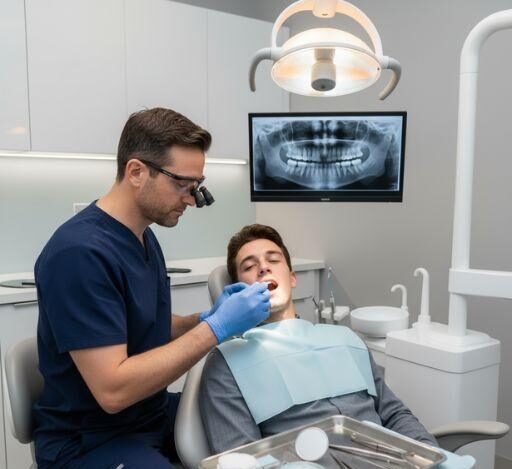
An emergency dentist in Orem, UT, by contrast, is specifically trained and equipped to handle exactly this situation. They can evaluate the tooth and socket, gently clean and reimplant the tooth, stabilize it with a splint, and begin the process of giving that tooth the best possible chance of long-term survival. This is a procedure that must happen quickly — and a dental office is the only place it can happen correctly.
So unless you have additional injuries that require immediate medical attention — a head injury, significant facial trauma, uncontrolled bleeding from soft tissue wounds, or loss of consciousness — your first call should be to an emergency dental office in Orem, Utah.
When the ER Should Be Your First Stop
There are specific circumstances where going to the emergency room first — or simultaneously — is absolutely the right call, even for a knocked-out tooth:
Significant Head or Neck Trauma — If the same accident that knocked out your tooth also caused a head injury, neck pain, confusion, loss of consciousness, or any neurological symptoms, call 911 or go directly to the ER. Head and spinal injuries take absolute priority over dental care. Once you are medically stable, your dental situation can be addressed.
Severe, Uncontrolled Facial Bleeding — Moderate bleeding from the tooth socket is expected and manageable with gauze pressure. But if you have deep lacerations to the face, lips, or tongue that are bleeding heavily and not slowing with pressure, those wounds may require suturing in an ER setting before dental treatment can occur.
Suspected Broken Jaw — If you cannot open or close your mouth normally, experience severe jaw pain, or notice your bite feels dramatically different after the injury, you may have a fractured jaw. This is a medical emergency requiring imaging and care that an ER is better positioned to provide. Jaw fractures often require specialist referral to an oral and maxillofacial surgeon.
A Child With Possible Head Injury — Children are more vulnerable to traumatic brain injury than adults. If a child’s tooth was knocked out during a fall or collision that also involved a blow to the head, evaluation at an ER or urgent care facility should happen first — particularly if the child is acting confused, unusually sleepy, or vomiting.
Signs of Shock — Dizziness, extreme pallor, rapid shallow breathing, or fainting after a traumatic injury signal shock, which requires immediate emergency medical attention regardless of dental concerns.
In all of these scenarios, the medical emergency takes precedence. However — and this is important — while you are seeking emergency medical care, or while someone else is driving you to the ER, you or someone with you should still be taking steps to preserve the knocked-out tooth. Because even if the ER visit takes an hour, having properly preserved the tooth gives you a real shot at saving it once you’re medically stable and can see an emergency dentist in Orem, UT.
The 60-Minute Window: Why Time Is Everything
Here is the most important piece of information in this entire guide, and it bears repeating with full emphasis: a knocked-out permanent tooth has the best chance of successful reimplantation when it is reattached within 30 to 60 minutes of the injury.
After 60 minutes outside the socket, the periodontal ligament cells on the tooth’s root — the living tissue that anchors the tooth to the bone — begin to die in large numbers. The longer the tooth is out of the mouth, the lower the survival rate of those cells, and the lower the likelihood that the tooth will successfully reintegrate into the jawbone after reimplantation.
This is not a reason to panic. It is a reason to act decisively and quickly. Every minute you spend searching online or deciding where to go is a minute that could be spent calling an emergency dental office in Orem, UT, getting in the car, and heading toward treatment with your tooth properly preserved. Make the call, then read the rest.
What to Do With the Knocked-Out Tooth Right Now
While you are arranging transportation to your Orem emergency dental appointment, the way you handle and store the tooth makes a critical difference. Follow these steps carefully:
Pick It Up by the Crown Only The crown is the white, visible part of the tooth — the part you see when you smile. The root is the pointed end that sat inside the gum. Never touch the root. The periodontal ligament cells attached to the root are delicate and easily damaged by handling, and damaging them dramatically reduces the chance of successful reimplantation.
Rinse Gently If It’s Dirty If the tooth fell on a dirty surface, rinse it briefly under clean, cool water — no more than ten seconds. Do not scrub the tooth, use soap, wrap it in a dry cloth, or use hydrogen peroxide or alcohol of any kind. Any of these will destroy the fragile root surface cells you are working so hard to protect.
Try to Reposition It in the Socket If you can — and if the patient is a cooperative adult or older child who won’t accidentally swallow it — gently slide the tooth back into its socket in the correct orientation and bite down softly on a piece of gauze or clean cloth to hold it in place. This is the single best storage environment for an avulsed tooth because it keeps the root cells alive in their natural biological environment.
If Repositioning Isn’t Possible, Store It in Milk Whole milk is the next best storage medium for a knocked-out tooth because its osmolality and pH are compatible with the survival of periodontal ligament cells. Place the tooth in a small container of whole milk — not water, not a dry container, not a paper towel — and bring it with you to your appointment.
Saline or Saliva Are Also Acceptable If milk isn’t available, the tooth can be stored in a saline solution (contact lens saline works well), or held inside the patient’s mouth between the cheek and gum, using saliva as the storage medium. This is only appropriate for older children and adults who will not accidentally swallow the tooth.
Do Not Store It in Plain Water Water is actually a poor storage medium for an avulsed tooth because plain water causes the root cells to swell and rupture due to differences in osmotic pressure. Many people instinctively reach for water, but milk or saline is always the significantly better choice.
What Happens at Your Emergency Dental Appointment in Orem, UT
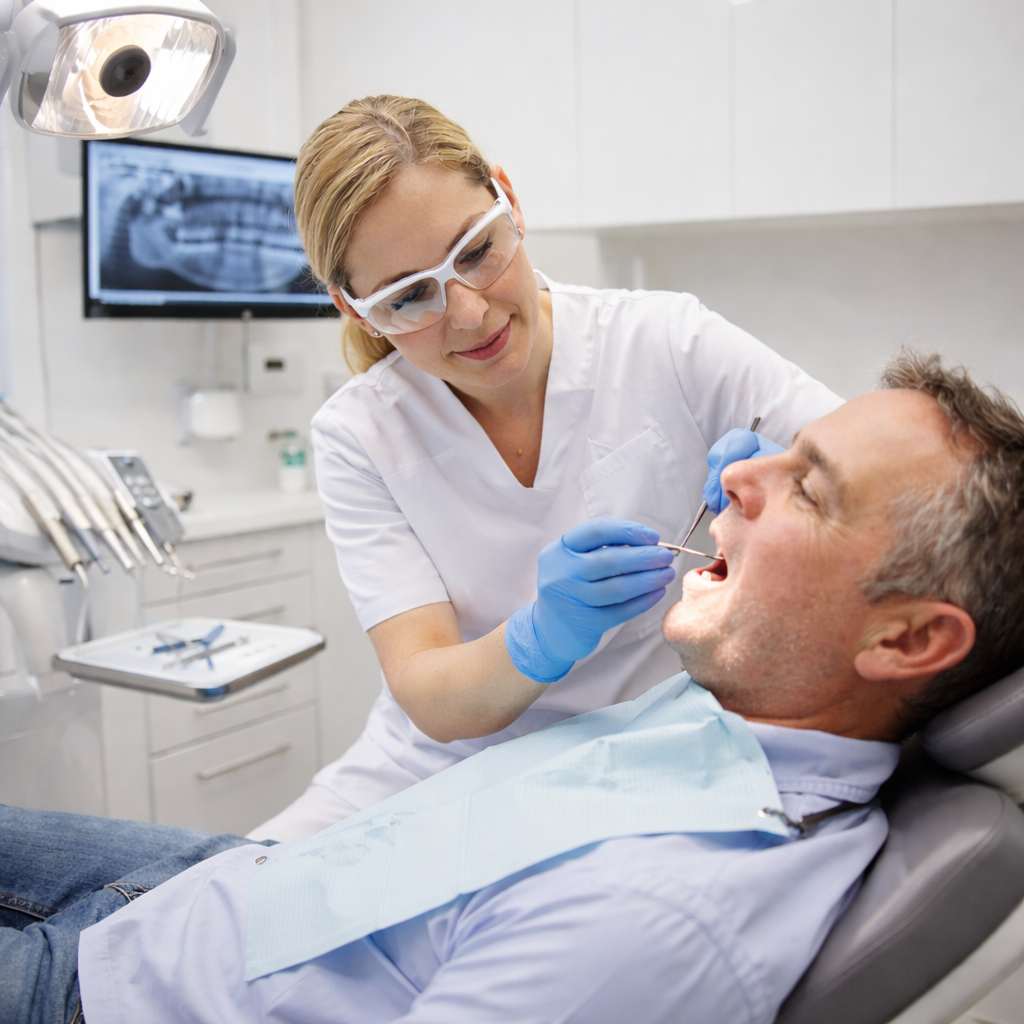
When you arrive at an emergency dental office in Orem, Utah with a knocked-out tooth, the clinical team will move quickly and with purpose. Here is what the process typically looks like:
Immediate Assessment Your emergency dentist will examine the socket, the surrounding teeth and bone, and the knocked-out tooth itself. Digital X-rays will be taken to evaluate the socket and ensure there are no underlying fractures in the jawbone or adjacent teeth.
Socket Preparation and Reimplantation The socket is gently cleaned of any clot or debris. Local anesthesia is administered so you feel minimal discomfort. The tooth is then carefully reimplanted into its socket and seated to the correct depth, guided by the X-ray and the dentist’s clinical assessment.
Stabilization with a Dental Splint Once reimplanted, the tooth is stabilized using a flexible dental splint — a thin wire or fiber-reinforced composite material bonded to the reimplanted tooth and the adjacent teeth on either side. This splint holds the tooth stable while the surrounding ligament and bone begin to reattach, typically for one to two weeks.
Follow-Up Root Canal Planning In the majority of cases involving reimplanted permanent teeth in adults, a root canal will be needed within one to two weeks of reimplantation. This is because the trauma severs the tooth’s blood supply, causing the pulp tissue to die. Root canal therapy removes that tissue and seals the tooth to prevent internal infection — a step that is critical for long-term tooth survival after reimplantation.
Antibiotics and Aftercare Your dentist will likely prescribe antibiotics to reduce infection risk, and will provide detailed aftercare instructions covering diet, hygiene around the splint, and follow-up appointment scheduling.
What About Baby Teeth — Does the Same Apply?
This is a critically important distinction that many parents don’t know: a knocked-out baby tooth should not be reimplanted. Attempting to reimplant a primary tooth risks damaging the permanent tooth bud developing beneath it, which can cause lasting harm to the adult tooth that follows.
If your child knocks out a baby tooth, control the bleeding with gentle gauze pressure, keep your child calm, and call a pediatric emergency dentist in Orem, UT for guidance. The dentist will want to see the child to ensure the socket is healthy, that no root fragments remain, and that the developing permanent tooth beneath is unaffected. A space maintainer may be recommended if the baby tooth was lost significantly earlier than expected.
Why an Emergency Dentist in Orem Is Your Best Asset in This Situation
Orem, Utah is a community that takes dental health seriously, and residents have access to experienced, well-equipped emergency dental practices that handle avulsed teeth with the urgency and precision this situation demands. Many Orem emergency dental offices offer same-day appointments specifically for trauma cases, extended hours to accommodate accidents that happen outside of normal business hours, and clinical teams with the experience to give reimplanted teeth the best possible chance of survival.
The proximity of these providers throughout Utah County — whether you’re near University Parkway, State Street, or anywhere across the Orem area — means that the 30-to-60-minute reimplantation window is genuinely achievable if you act quickly and call the moment the injury occurs.
Time, tooth handling, and the right provider are the three variables in your control. An emergency dentist in Orem, UT gives you the best possible outcome for all three.
Knocked Out a Tooth in Orem, Utah? Call Us Right Now
This is not a situation where waiting to see how things develop is an option. Every passing minute reduces your chance of saving that tooth. Whether it happened five minutes ago or you’re reading this as a precaution for a family member — knowing the right number to call before an emergency strikes is the single most valuable preparation you can make.
Call our Orem, Utah emergency dental office immediately for same-day knocked-out tooth treatment.
Our emergency dental team is ready to see you right now — with the skill, the equipment, and the urgency this situation demands. Bring the tooth, get here fast, and let us do everything in our power to save your smile. Don’t wait another minute. Call now.
Frequently Asked Questions (FAQ)
Q: Should I go to the ER or an emergency dentist for a knocked-out tooth in Orem, Utah?
In most cases, go directly to an emergency dentist in Orem, UT. Emergency rooms cannot reimplant teeth and do not have the dental equipment to do so. The only exceptions are when you have accompanying injuries such as a head trauma, broken jaw, uncontrolled bleeding, or signs of shock that require immediate medical attention.
Q: How long do I have to save a knocked-out tooth?
The best outcomes occur when the tooth is reimplanted within 30 minutes. Reimplantation within 60 minutes is still viable in many cases. Beyond 60 minutes, success rates drop significantly — though reimplantation can still be attempted up to two hours after the injury if the tooth has been properly stored.
Q: What is the best way to store a knocked-out tooth until I reach the dentist?
The best options in order of preference are: repositioned in the tooth socket, stored in whole milk, stored in saline solution, or held between the cheek and gum. Never store a knocked-out tooth in plain water or wrap it in a dry cloth or paper towel.
Q: Can a knocked-out tooth be saved if it’s been out for more than an hour?
Possibly, but the success rate decreases substantially after 60 minutes. Proper storage in milk or saline slows cell death and extends the viable window. Always bring the tooth to your emergency dentist in Orem regardless of how long it’s been out — let the dentist make the clinical determination.
Q: Does it matter which part of the tooth I touch?
Yes, significantly. Always handle a knocked-out tooth by the crown — the white enamel surface. Never touch the root. The delicate periodontal ligament cells on the root surface are essential for successful reimplantation and are easily destroyed by handling, scrubbing, or drying.
Q: Should a knocked-out baby tooth be reimplanted?
No. Reimplanting a baby tooth risks damaging the permanent tooth developing beneath it. Contact a pediatric emergency dentist in Orem, UT to have the area evaluated and monitored for complications.
Q: Will I need a root canal after a knocked-out tooth is reimplanted?
In most adult cases, yes. When a permanent tooth is knocked out and reimplanted, the pulp tissue typically dies due to loss of blood supply. A root canal — usually performed one to two weeks after reimplantation — removes that tissue and protects the tooth from internal infection, which is essential for long-term survival.
Q: What happens if a knocked-out tooth can’t be saved?
If reimplantation is not successful or not possible, tooth replacement options include a dental implant, a fixed dental bridge, or a removable partial denture. Your Orem emergency dentist will discuss these options with you once the immediate situation has been addressed.
Related reading: The 60-Minute Rule: What to Do If You Knock Out a Tooth in Orem, Utah