Why Is My Tooth Suddenly Sensitive to Hot or Cold? When to See an Emergency Dentist in Orem, UT
A jolt of pain from your morning coffee or a sip of ice water usually means the protective enamel on that tooth has thinned, or the dentin layer underneath has been exposed, letting hot and cold reach the nerve inside. Most of the time that’s routine — enamel erosion, gum recession, or a small cavity — and it can wait for a normal appointment. It becomes an emergency when the pain lingers well after the trigger is gone, comes with facial or gum swelling, wakes you up at night, or shows up alongside a fever or a bad taste that won’t go away, since those point to an infected tooth that needs same-day care. If you’re in Orem, Utah and trying to figure out which situation you’re in, here’s how to tell the difference — and what Canyon Gate Dental can do either way.
What’s Actually Happening Inside a Sensitive Tooth
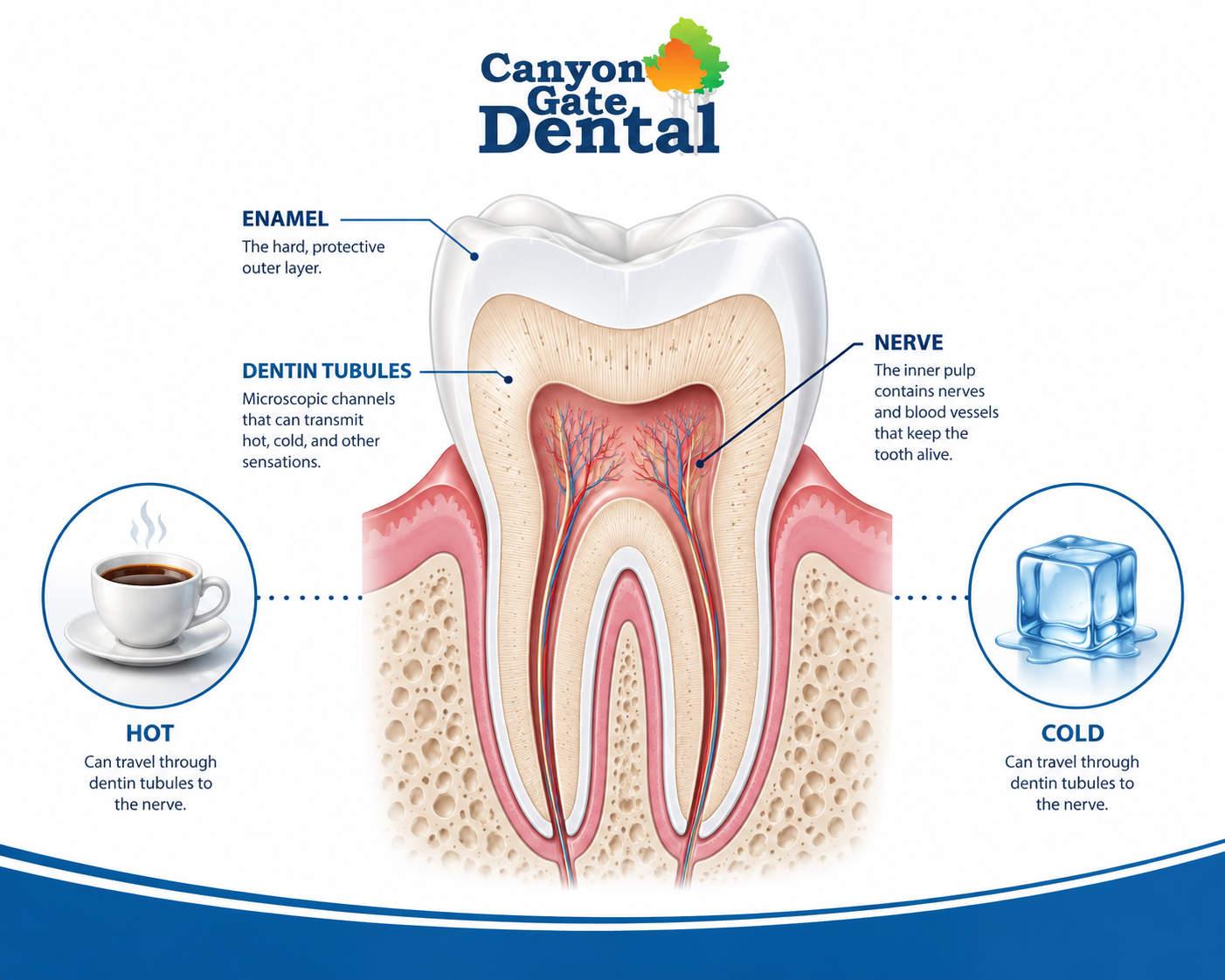
Every tooth has three layers: hard outer enamel, a softer layer underneath called dentin, and the pulp at the center, where the nerve lives. Dentin is packed with thousands of microscopic tubules that run straight toward that nerve. As long as enamel — or, below the gumline, a layer called cementum — fully covers the dentin, hot and cold can’t reach those tubules. Once enamel wears thin, chips, or gum tissue pulls back and exposes the root, temperature changes cause fluid inside the tubules to shift, which triggers the nerve and produces that sharp, sudden pain. This is why sensitivity can feel disproportionate to how a tooth looks: it can appear completely normal from the outside while the dentin underneath is exposed at a microscopic level.
The Most Common Causes of Sudden Tooth Sensitivity
Several different problems can produce the exact same symptom, which is why sensitivity is so hard to diagnose without an exam. Here’s how the most common causes tend to show up:
| Cause | What It Usually Feels Like | What It Usually Needs |
| Enamel erosion (acidic foods/drinks, aggressive brushing) | Widespread sensitivity across several teeth, gradual onset | Desensitizing treatment, softer brushing habits, diet adjustments |
| New or growing cavity | Sensitivity in one specific tooth, sometimes a visible spot | Exam and a filling to remove decay and reseal the tooth |
| Gum recession (root exposure) | Sensitivity near the gumline, often on one side of the mouth | Gum evaluation and a desensitizing agent or fluoride application |
| Cracked tooth or failed filling | Sharp pain on biting or chewing, not just temperature | Exam to assess the crack; may need a crown or filling replacement |
| Recent dental work or whitening | Sensitivity right after a filling, crown, or whitening treatment | Usually temporary; persistent cases need a follow-up exam |
| Teeth grinding (bruxism) | Sensitivity plus flattened or chipped edges, often noticed on waking | Night guard evaluation and an enamel-protection plan |
It’s common for more than one of these to be happening at once — a patient with some enamel wear from acidic drinks, for example, may also be grinding their teeth at night, and each factor makes the other more noticeable. That overlap is exactly why an exam, rather than guesswork, is the fastest way to a real answer.
Why Sensitivity Shows Up More Often for Orem Residents
A few things about life in Orem make sudden tooth sensitivity more common than people expect. Utah Valley’s winters bring long stretches of cold, dry air, and the walk from a heated car into a freezing parking lot is enough to trigger a sharp response in a tooth that already has thin enamel or a bit of gum recession. On the other side of the calendar, Orem’s hot, dry summers mean a steady rotation of iced drinks and popsicles working against those same vulnerable teeth.
Orem is also home to Utah Valley University, and with roughly 45,000 students moving through the city, energy drinks, sports drinks, and pre-workout supplements are part of daily life for a large share of the population. Those drinks are acidic enough to soften and gradually wear down enamel with regular use, which is one of the more common causes of sensitivity we see in Orem patients in their teens, 20s, and 30s.
Orem’s reputation as “Family City USA” also means a lot of parents and grandparents experimenting with whitening trays and whitening toothpaste picked up locally or online — all of which can bring on temporary sensitivity, especially when used more often than directed. Between the seasonal temperature swings, the energy-drink habits around UVU, and how common DIY whitening has become, sudden tooth sensitivity is one of the most frequent concerns we hear from patients across Orem and the surrounding Utah Valley communities.
Routine Sensitivity vs. a Dental Emergency
Not every twinge needs same-day care, but a few patterns tell you which side of that line you’re on:
| Symptom Pattern | What It Likely Means | What To Do |
| Brief, sharp pain that fades in a few seconds | Mild dentin exposure — common and usually manageable | Schedule a routine exam |
| Sensitivity in several teeth after diet changes | Enamel erosion | Schedule a routine exam |
| Pain that lingers 30+ seconds after hot or cold is gone | Possible nerve involvement or infection | Call promptly — same-day if it worsens |
| Sharp pain when biting down, not just from temperature | Possible crack or failed filling | Call promptly — same-day if it worsens |
| Sensitivity with facial, gum, or jaw swelling, fever, or a bad taste | Likely abscess or spreading infection | Same-day emergency call |
| Sensitivity that started right after a broken or knocked-out tooth | Dental trauma | Same-day emergency call |
The general rule dentists use: brief and predictable sensitivity is usually fine to schedule normally, while lingering pain, swelling, or a bite-triggered ache is worth a same-day call. A short exam is really the only reliable way to tell these apart, since several causes can produce nearly identical symptoms on the surface.
What Counts as a Dental Emergency in Orem, UT
A sensitive tooth crosses into emergency territory when it’s paired with one or more of these signs:
- Pain that lingers 30 seconds to a minute or longer after the hot or cold is gone
- Swelling in the gums, cheek, or jaw around the sensitive tooth
- A fever alongside the tooth pain
- A persistent bad taste or a small bump on the gum near the tooth (possible abscess)
- Pain sharp enough to wake you up at night or that over-the-counter pain relievers don’t touch
- Sensitivity that started right after a broken, cracked, or knocked-out tooth
Any of these point toward an infected or damaged tooth rather than simple dentin exposure, and infections don’t resolve on their own — they need same-day treatment to keep from spreading. If you have severe facial swelling along with difficulty breathing or swallowing, that’s a medical emergency: call 911 or go to the nearest emergency room rather than waiting for a dental appointment.
What to Expect at a Sensitivity or Emergency Exam at Canyon Gate Dental
When a patient in Orem calls about sudden tooth sensitivity, the team at Canyon Gate Dental figures out quickly whether it’s routine or needs same-day attention. Dr. Payne or Dr. Young starts with a visual exam plus a few simple temperature and bite tests to narrow down which tooth is reacting and why, and digital X-rays help rule out decay or infection that isn’t visible on its own. If the exam points to an infection or abscess, Canyon Gate Dental prioritizes same-day emergency appointments so it can be treated before it spreads. If it’s a more routine cause — a small cavity, worn enamel, or exposed root — it’s scheduled like any other visit. Either way, patients across Orem, Provo, and the rest of Utah Valley leave with a clear answer instead of guessing.
Routine or Urgent — Here’s What to Do Next
Whether it’s routine sensitivity or something more urgent, don’t wait to find out.
Call Canyon Gate Dental of Orem at (801) 764-9444 — same-day emergency appointments are available for Orem-area patients — or request a routine appointment online at canyongatedental.com. Dr. Payne, Dr. Young, and the team serve Orem, Provo, Lindon, and the rest of Utah Valley.
Frequently Asked Questions
Why did my tooth suddenly become sensitive to cold when it never used to be?
Something changed that exposed the dentin layer beneath your enamel — most often enamel wear from acidic food or drink, a new cavity, gum recession, or a small crack. Sensitivity can appear seemingly overnight because the exposure often crosses a threshold rather than building up gradually and noticeably.
Is tooth sensitivity to hot and cold always a cavity?
No. A cavity is one common cause, but gum recession, enamel erosion, a cracked tooth, teeth grinding, and recent dental work can all produce the same symptom. An exam is the only reliable way to tell them apart.
Can gum recession cause sensitivity even if my gums don’t look pulled back?
Yes. Recession can be mild enough that it’s hard to notice in the mirror while still exposing enough root surface to react to temperature, especially near the gumline on one or two teeth.
My tooth hurts with hot drinks but not cold ones — is that different?
It can be. Cold-triggered pain that fades quickly usually points to exposed dentin, while pain from heat that lingers after the drink is gone can point to inflammation or infection inside the tooth’s nerve, which typically needs prompt attention.
Will tooth sensitivity go away on its own?
Mild sensitivity from something like a new toothpaste or a recent whitening treatment often settles down within a week or two. Sensitivity tied to a cavity, crack, or ongoing gum recession usually won’t resolve without treatment and can get worse.
Can teeth whitening cause sudden sensitivity?
Yes, both professional and at-home whitening treatments can cause temporary sensitivity as the whitening agent reaches the dentin. It’s usually short-lived, but sensitivity that continues well after treatment ends is worth mentioning at your next visit.
How soon should I see a dentist in Orem if my tooth sensitivity doesn’t go away?
If sensitivity lasts more than a couple of weeks or shows up suddenly in a single tooth with no other symptoms, it’s worth scheduling a routine exam at Canyon Gate Dental rather than waiting for a routine cleaning.
Is tooth sensitivity ever a dental emergency?
Yes — when it’s paired with swelling, fever, a persistent bad taste, or pain that lingers well after the hot or cold is gone. Those signs usually point to an infected tooth, which needs same-day treatment rather than a routine appointment.
Does Canyon Gate Dental offer same-day emergency appointments in Orem?
Yes. Canyon Gate Dental prioritizes same-day emergency appointments for Orem-area patients dealing with severe pain, swelling, or a damaged tooth. Call (801) 764-9444 and the team can tell you quickly whether your situation needs to be seen right away.