What Should I Do If My Face or Jaw Is Swollen from a Tooth Infection?
You woke up and one side of your face looks noticeably puffy. Or maybe the swelling came on gradually over a few days — a dull ache that turned into throbbing pain, and now your jaw feels tight and your cheek is visibly inflamed. If this sounds familiar, there’s a good chance you’re dealing with a tooth infection, and this is not something you should wait out at home.
Facial and jaw swelling caused by a tooth infection is one of the most serious dental emergencies a person can experience. Left untreated, what starts as a localized abscess can spread rapidly to your neck, throat, and even your brain. If you’re in Orem, Utah, and you’re experiencing these symptoms right now, understanding what’s happening in your body — and what to do about it — could quite literally save your life.
This guide covers everything you need to know about tooth infection swelling in Orem, UT: what’s causing it, when it becomes life-threatening, what an emergency dentist can do, and exactly how to handle the situation step by step.
What Causes a Swollen Face or Jaw from a Tooth Infection?
A tooth infection — also called a dental abscess — occurs when bacteria invade the inner pulp of a tooth, typically through untreated decay, a cracked tooth, or damaged gum tissue. Once bacteria reach the pulp, they multiply rapidly, creating a pocket of pus called an abscess.
There are two primary types of dental abscesses:
Periapical Abscess — This forms at the tip of a tooth’s root and is usually the result of untreated tooth decay or a previous dental injury. It’s the most common type and often the cause of significant facial swelling.
Periodontal Abscess — This develops in the gum tissue alongside a tooth and is commonly associated with advanced gum disease. It can cause both localized and spreading swelling in the jaw.
In both cases, the body’s immune response causes inflammation, and as infection intensifies, the swelling expands beyond the tooth itself into the surrounding soft tissues of the face and jaw. This spreading swelling is your body’s distress signal — and it demands prompt attention from an emergency dentist in Orem, Utah.
Warning Signs That Your Tooth Infection Is Becoming Dangerous
Not all dental pain is an emergency, but facial swelling from a tooth infection almost always is. The moment swelling begins to spread beyond the immediate tooth area, the infection has advanced into the surrounding tissues — a condition called cellulitis — and it can escalate with frightening speed.
Seek emergency dental care in Orem, UT immediately if you experience any of the following:
- Visible swelling of the cheek, jaw, or face that is worsening
- Difficulty opening your mouth, chewing, or swallowing
- Swelling that extends to your neck or throat
- Difficulty breathing or a sensation that your airway feels restricted
- A high fever (above 101°F), chills, or general feeling of illness
- Severe throbbing pain that is not relieved by over-the-counter medication
- A foul taste in your mouth or pus draining near a tooth
- Swollen lymph nodes beneath your jaw or in your neck
It’s critically important to understand that if you are having difficulty swallowing or breathing, this is no longer just a dental emergency — it is a medical emergency. Call 911 or go directly to the nearest emergency room immediately. Infections that reach the floor of the mouth or throat can cause a life-threatening condition called Ludwig’s Angina, which can obstruct the airway within hours.
What to Do Right Now: Step-by-Step
If your face or jaw is swollen and you suspect a tooth infection, here’s exactly what to do while you seek professional care:
Step 1: Call an Emergency Dentist in Orem, Utah Right Away Don’t wait to see if the swelling goes down on its own. Most dental abscesses do not resolve without professional treatment. Call a dental office that offers same-day emergency appointments in Orem, UT and describe your symptoms clearly — specifically mention the facial swelling, as this will help the office prioritize your appointment.
Step 2: Take an Anti-Inflammatory Pain Reliever Ibuprofen (Advil or Motrin) can help reduce both pain and inflammation while you wait for your appointment. Follow the dosage instructions on the label. Do not place aspirin directly against the gum or tooth — this can cause tissue irritation and won’t speed up healing.
Step 3: Rinse with Warm Salt Water Gently rinsing your mouth with a warm saltwater solution (½ teaspoon of salt dissolved in 8 oz of warm water) several times a day can help reduce bacteria and provide mild temporary relief. It won’t treat the underlying infection, but it keeps the area cleaner.
Step 4: Apply a Cold Compress to the Outside of Your Face A cold compress or ice pack wrapped in a cloth, applied to the outside of your swollen cheek for 15–20 minutes at a time, can help minimize swelling and numb the area. Never apply ice directly to skin.
Step 5: Avoid Heat While it may be tempting to apply a warm compress for comfort, heat can actually draw the infection outward and worsen swelling. Stick to cold therapy only until you’ve been evaluated by your dentist.
Step 6: Stay Upright and Hydrated Lying flat can increase blood flow to the infected area and intensify throbbing pain. Try to keep your head elevated, especially at night. Staying well-hydrated also supports your immune system as it fights the infection.
How an Emergency Dentist in Orem Treats a Tooth Infection with Facial Swelling
When you arrive at an emergency dental office in Orem, Utah, the treatment process is focused on two immediate goals: eliminating the source of infection and relieving pressure. Here’s what to expect:
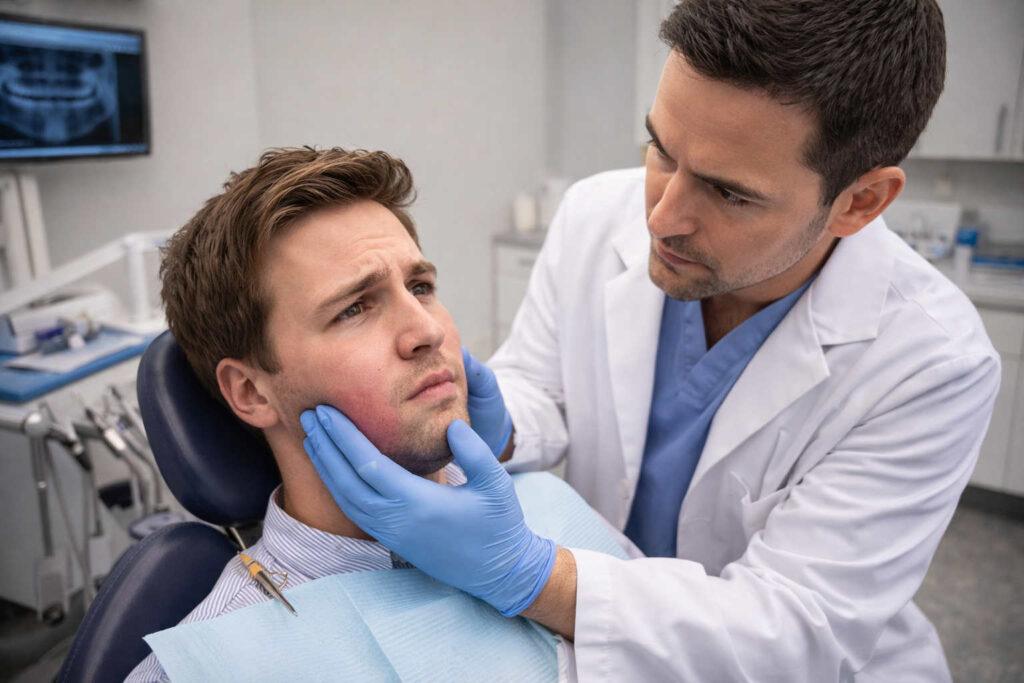
Examination and X-Rays — Your dentist will take digital X-rays to locate the abscess and assess how far the infection has spread. This determines which treatment approach is needed and how urgently.
Prescription Antibiotics — In almost all cases involving facial swelling, antibiotics are prescribed immediately to stop the spread of infection. While antibiotics alone won’t cure a dental abscess, they are essential for controlling the bacterial load and protecting surrounding tissue.
Abscess Drainage — If the abscess is accessible, your emergency dentist will make a small incision to drain the pus. This provides almost immediate relief of pressure and pain and is one of the most important steps in treatment.
Root Canal Therapy — If the infected tooth can be saved, a root canal removes the infected pulp, cleans the root canals, and seals the tooth. Many Orem emergency dental offices offer same-day root canal treatment using advanced technology that makes the procedure more comfortable and efficient than ever before.
Tooth Extraction — In cases where the tooth is too damaged to save, or where the infection is too severe, extraction removes the source entirely. This is often the fastest route to full recovery when the infection has significantly spread.
Referral to an Oral Surgeon or ER — If the infection has spread extensively into the neck or throat, or if you’re showing signs of systemic infection (fever, chills, difficulty swallowing), your emergency dentist may refer you directly to a hospital oral surgeon or emergency room for IV antibiotics and advanced care.
Can I Just Take Antibiotics and Skip the Dentist?
This is one of the most common questions people ask when dealing with a swollen jaw from a tooth abscess in Orem, UT — and the answer is no, not safely. Antibiotics manage bacterial spread but they cannot drain the abscess or remove the infected tissue. Without removing the source of infection, the abscess will return — often worse than before — once the antibiotics are finished.
Think of it this way: antibiotics treat the fire alarm, but a dentist puts out the actual fire. Both are necessary, and skipping the dental treatment leaves you in a dangerous and recurring cycle.
Why Residents of Orem, Utah Should Act Quickly
Orem is a vibrant, growing community nestled in Utah County along the Wasatch Front, where access to quality emergency dental care in Orem, UT is thankfully well within reach. Whether you’re near University Parkway, Center Street, or anywhere throughout Utah County, same-day emergency dental appointments are available at local offices equipped to handle dental abscesses, jaw swelling, and related infections with urgency and compassion.
Delaying treatment — even by 24 to 48 hours — gives a tooth infection time to spread. Residents of Provo, Lindon, American Fork, and surrounding communities who find themselves with facial swelling from a dental abscess should not hesitate to seek care from a trusted emergency dentist in the Orem area immediately.
Don’t Wait — A Swollen Jaw Is a Dental Emergency
Facial and jaw swelling from a tooth infection is not something to manage with home remedies and wishful thinking. It is a genuine medical emergency that can become life-threatening if ignored. The sooner you receive professional treatment, the better your outcome — for your tooth, your health, and your peace of mind.
Call our Orem, Utah emergency dental office right now to schedule your same-day appointment.
We treat dental abscesses and tooth infection swelling with the urgency they deserve — offering compassionate care, effective pain relief, and fast treatment to stop infection in its tracks. Your health is too important to wait. Call us now.
Frequently Asked Questions (FAQ)
Q: Is a swollen face from a tooth infection dangerous? Yes, it can be life-threatening if left untreated. Dental infections can spread to the neck, throat, and brain. Seek emergency dental care in Orem, UT immediately if you have facial or jaw swelling.
Q: Will the swelling go down on its own? Rarely, and never safely. While the pain may temporarily subside if the abscess ruptures, the infection remains active and will worsen without proper dental treatment and antibiotics.
Q: How long does it take for facial swelling from a tooth infection to go down after treatment? Most patients notice significant improvement within 24–48 hours of receiving antibiotics and drainage. Full resolution of swelling typically occurs within 3–7 days following treatment.
Q: Can I go to urgent care instead of an emergency dentist? Urgent care can prescribe antibiotics and manage pain, but they cannot drain an abscess or treat the infected tooth. You will still need to see an emergency dentist in Orem as soon as possible.
Q: What happens if I ignore a tooth infection with swelling? The infection can spread rapidly to your neck, airway, or bloodstream — a potentially fatal condition called sepsis. Never ignore a dental abscess with facial swelling.
Q: Does a root canal hurt if my face is already swollen? Modern root canal therapy is performed under local anesthesia and is designed to relieve — not cause — pain. Most patients report feeling significantly better after the procedure compared to before.
Q: How much does emergency tooth infection treatment cost in Orem, Utah? Costs vary depending on the treatment needed. Many emergency dental offices in Orem accept insurance and offer payment plans through providers like CareCredit to make care accessible and affordable.
Frequently Asked Questions
What should I do if my face or jaw is swollen from a tooth infection?
Call an emergency dentist immediately, take an anti-inflammatory pain reliever like ibuprofen, rinse with warm salt water, apply a cold compress, avoid heat, and stay upright and hydrated.
When is a tooth infection with swelling considered a medical emergency?
If you have difficulty swallowing or breathing, swelling spreading to your neck or throat, high fever, or severe pain, seek emergency medical care immediately by calling 911 or going to the nearest emergency room.
Can antibiotics alone cure a tooth infection with swelling?
No, antibiotics help control the infection but do not remove the abscess or infected tissue. Dental treatment is necessary to drain the abscess or remove the infected tooth.
What treatments can an emergency dentist provide for a swollen face or jaw from a tooth infection?
Treatments include examination and X-rays, prescription antibiotics, abscess drainage, root canal therapy, tooth extraction, and referral to a hospital if the infection has spread extensively.
Why should residents of Orem, Utah act quickly if they have swelling from a tooth infection?
Because untreated infections can spread rapidly to the neck, throat, and brain, causing life-threatening conditions. Prompt dental care can prevent serious complications.