What Your Soft Drinks Are Actually Doing to Your Teeth
By Dr. Nicolas Young, DMD — Canyon Gate Dental, Orem, Utah
A few years back, a senior executive at one of the world’s largest soft drink companies gave an interview in which she described a typical day of her own beverage habits: a mini Diet Coke in the morning, a Powerade Zero, two more Diet Cokes throughout the day, a Gold Peak Tea, and a regular Coke. She pointed out that only one of those beverages contained meaningful calories — just 93 in total — and concluded her diet was perfectly healthy.
From a weight management standpoint, her math is technically defensible. But as a dentist, reading that interview made me wince.
Because what she described wasn’t a healthy beverage day. It was a six-round daily acid bath for her teeth.
The pH Scale and Why Your Mouth Cares
You may remember the pH scale from high school chemistry. It runs from 0 to 14 — 0 being the most acidic (battery acid), 14 being the most alkaline (liquid drain cleaner), and 7 being neutral. Your mouth is designed to sit at a neutral pH of around 7. It has sophisticated buffering mechanisms — saliva being the main one — that work to neutralize acidic attacks and keep the oral environment stable.
Here’s the catch: the scale is logarithmic. Every step down represents a tenfold increase in acidity. A pH of 6 is ten times more acidic than 7. A pH of 5 is one hundred times more acidic. A pH of 4 is one thousand times more acidic than your mouth’s natural equilibrium.
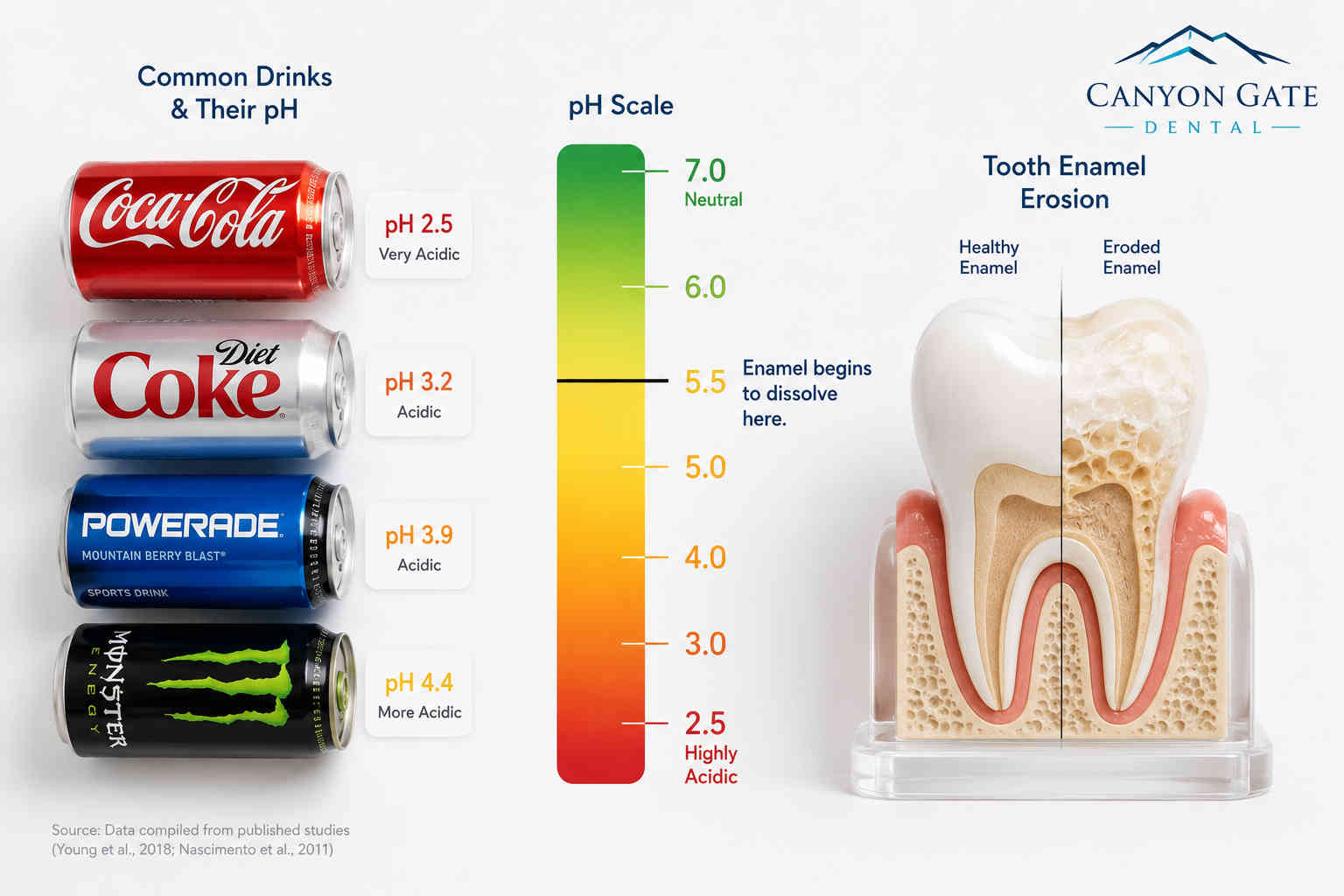
And tooth enamel — the hardest substance in the human body — begins to soften and dissolve at a pH of 5.5.
Now look at what’s in most people’s cup holders, desk drawers, and refrigerators.
The pH of Your Favorite Drinks — The Numbers Are Worse Than You Think
Here’s what that Coca-Cola executive was actually drinking every day, with the pH values of each beverage:
| Beverage | pH |
| Powerade Zero | 2.75 |
| Coca-Cola (regular) | 2.63 |
| Diet Coke | 3.39 |
| Gold Peak Tea | 4.80 |
| Black coffee | ~5.0 |
| Orange juice | ~3.5–4.0 |
| Sports drinks (average) | 2.9–3.7 |
| Energy drinks | 2.9–3.3 |
| Sparkling water (plain) | 4.5–5.5 |
| Still water | 7.0 |
Every single soft drink, sports drink, and energy drink on that list sits well below the 5.5 threshold at which enamel begins to erode. Some of them — Powerade Zero at 2.75, regular Coke at 2.63 — are within a single pH unit of battery acid.
That’s not a scare tactic. That’s just the chemistry.
Diet Drinks Don’t Get You Off the Hook
This is the part that surprises people most consistently. The assumption is that diet sodas — because they contain no sugar — are safe for teeth. The sugar concern is real, but it’s only half the story.
The acid in soft drinks is the bigger dental problem, and it exists in diet versions just as heavily as in regular ones. Diet Coke sits at pH 3.39 — nearly identical to regular Coke in terms of its acidic impact on enamel. Diet Mountain Dew is even more acidic than its full-sugar counterpart.
Sugar feeds the specific bacteria that produce cavity-causing acid as a byproduct. That’s a real concern. But the phosphoric acid and citric acid in the beverage itself — present in both regular and diet versions — attack enamel directly, regardless of bacterial involvement. You get the acid damage with or without the sugar.
Which brings me back to that executive’s daily routine. Six acidic beverages per day, including four Diet Cokes and a Powerade. Zero calories, yes. But her enamel has no idea she’s watching her waistline.
One Drink Isn’t the Problem — Frequency Is
Our bodies are genuinely good at handling occasional acid exposure. Saliva neutralizes acid, remineralizes enamel between exposures, and buffers the oral environment back toward neutral pH relatively quickly after a single drink. If you have a Coke with lunch once or twice a week, your saliva has a real shot at managing the recovery.
The problem is frequency and duration. Every time you take a sip of an acidic beverage, your mouth drops below the critical pH threshold — and it stays there for roughly twenty to thirty minutes while your saliva works to bring it back up. If you’re sipping throughout the day — a habit that’s extremely common among soda drinkers, energy drink users, and yes, the Diet Coke crowd — your mouth is spending the majority of its waking hours in an acidic state. Saliva never gets the chance to fully recover.
That sustained acidic environment is where serious enamel erosion happens. Not from one drink, but from the cumulative effect of a daily habit repeated across months and years.
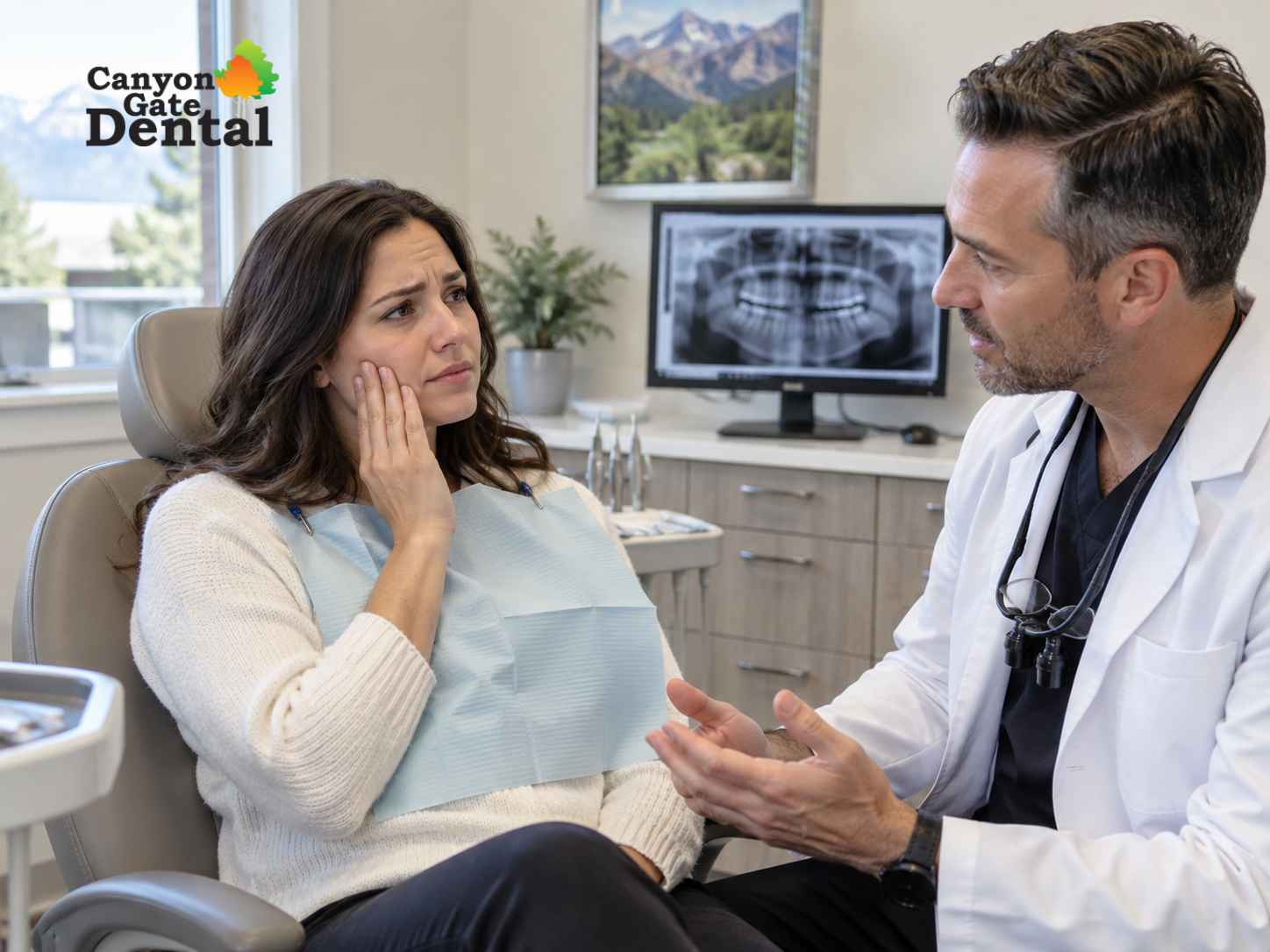
In our Orem dental practice, when we see a patient with extensive cavities — particularly cavities that don’t follow the usual pattern of appearing on chewing surfaces or between teeth — soda, energy drinks, or sports drinks are almost always part of the picture. The patients who come in with acid erosion across multiple teeth, or sensitivity that doesn’t seem to have an obvious structural cause, often have a daily beverage habit they haven’t thought much about. Once you understand the pH numbers, the clinical picture makes sense immediately.
Admit it, Utah — the Diet Coke habit is real, and your dentist notices.
Protecting Your Teeth Without Giving Up Everything You Enjoy
I’m not here to tell you to never drink a soda again. That’s not realistic, and frankly, it’s not my call to make about your life. But there are practical habits that meaningfully reduce the damage for people who aren’t ready to give up their afternoon Diet Coke:
Drink through a straw. A straw routes the liquid past your front teeth and reduces overall contact with enamel surfaces. It won’t eliminate the acid exposure, but it meaningfully reduces the surface area affected.
Don’t sip throughout the day. This is the single biggest change most people can make. Drinking one soda over fifteen minutes causes a single acid attack. Sipping the same soda over three hours keeps your mouth below pH 5.5 for the better part of an afternoon. Drink it, finish it, and give your saliva a chance to recover.
Chase it with water. Rinsing with water immediately after finishing an acidic beverage helps dilute and clear residual acid from tooth surfaces and speeds up the pH recovery process. It takes five seconds and makes a real difference.
Don’t brush immediately after. This one is counterintuitive, but important. Enamel that has been softened by acid is more vulnerable to physical abrasion, not less. Brushing within thirty minutes of an acidic drink can actually accelerate enamel loss. Wait at least thirty minutes after your last sip before brushing.
Swap some drinks for water. Not all of them. Just some of them. Replacing one soda per day with water eliminates one acid exposure entirely — and over weeks and months, that subtraction adds up.
What Enamel Erosion Actually Looks Like
Enamel doesn’t grow back. Once it’s gone, the tooth is more vulnerable to decay, more sensitive to temperature, and more likely to need restorative treatment. Acid erosion typically shows up as a smooth, slightly glossy appearance on tooth surfaces — particularly the back surfaces of upper front teeth — combined with increased sensitivity and a gradual change in the shape and translucency of affected teeth.
By the time a patient is noticing significant sensitivity or visible changes to their teeth, a meaningful amount of enamel has already been lost. The earlier this is identified, the more options exist for protecting what remains and preventing further damage.
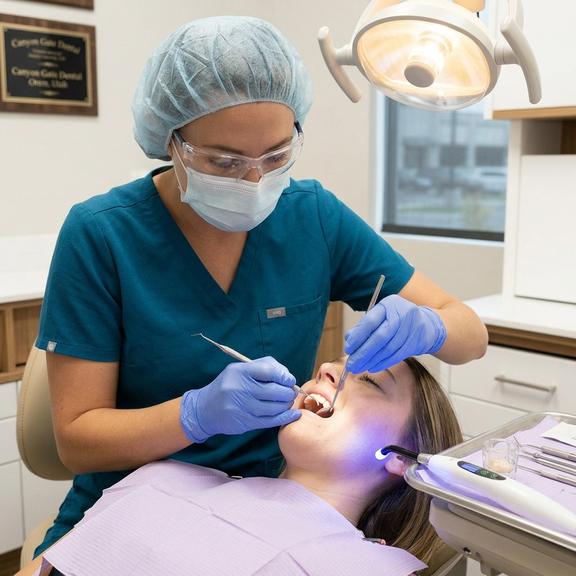
This is one reason why your regular cleaning appointments matter beyond just removing tartar. Our team looks for early signs of enamel erosion at every exam — and catching it early means we can work with you on the dietary habits that are causing it before the situation requires more extensive intervention.
Concerned About Your Teeth? Let’s Talk at Canyon Gate Dental in Orem, Utah
If you’re a daily soda drinker, an energy drink person, or someone who has noticed increased sensitivity or changes in how your teeth look or feel — a conversation with our team is worth having. Protecting what you have now is always easier and less expensive than restoring what’s been lost.
Call Canyon Gate Dental in Orem, Utah at 801-764-9444 to schedule your next cleaning and exam.
We’re at 440 W 800 N, Orem, UT 84057. We serve patients throughout Utah County and would love to help you keep your teeth healthy for the long run — Diet Coke habit and all.
— Dr. Nicolas Young, DMD
Frequently Asked Questions
Q: Are diet sodas safer for your teeth than regular sodas? Not in terms of acid damage. Diet sodas contain the same phosphoric and citric acids as regular sodas and sit at nearly identical pH levels. While they eliminate the sugar-driven bacterial decay pathway, the direct acid erosion of enamel occurs regardless. Both are hard on your teeth with frequent use.
Q: How acidic is Coca-Cola compared to battery acid? Regular Coke sits at approximately pH 2.63. Battery acid is around pH 1.0. While Coke is less acidic, it is significantly below the pH 5.5 threshold at which tooth enamel begins to soften — and it’s consumed repeatedly, which battery acid is not.
Q: Can the acid damage from soft drinks be reversed? Enamel cannot regenerate once lost. However, early-stage demineralization — before visible erosion has occurred — can sometimes be partially reversed with fluoride and good oral hygiene habits. Regular dental visits at Canyon Gate Dental in Orem, Utah allow us to catch and address enamel changes early.
Q: Is sparkling water as bad for teeth as soda? Plain sparkling water is mildly acidic (typically pH 4.5–5.5), making it significantly less damaging than sodas and sports drinks. Flavored sparkling waters with citric acid added can be more acidic, however. Among carbonated options, plain sparkling water is the safest choice for your teeth.
Q: How long should I wait to brush my teeth after drinking soda? Wait at least thirty minutes. Acidic drinks temporarily soften enamel, and brushing immediately after increases erosion rather than preventing it. Rinse with water right after drinking, then brush thirty minutes later.
Q: Is coffee bad for teeth in the same way sodas are? Black coffee is mildly acidic (around pH 5.0) — less damaging than sodas but still worth being aware of with daily use. Coffee’s primary dental concern is staining rather than acid erosion. Adding sugar introduces a cavity-risk dimension.
Q: How often should I come in for cleanings at Canyon Gate Dental in Orem, Utah? Every six months for most patients. If you have significant enamel erosion, a high cavity risk, or active gum disease, we may recommend more frequent visits. Call 801-764-9444 to schedule.