My Tooth Hurts When I Bite Down—Is That a Dental Emergency? An Orem Dentist Explains
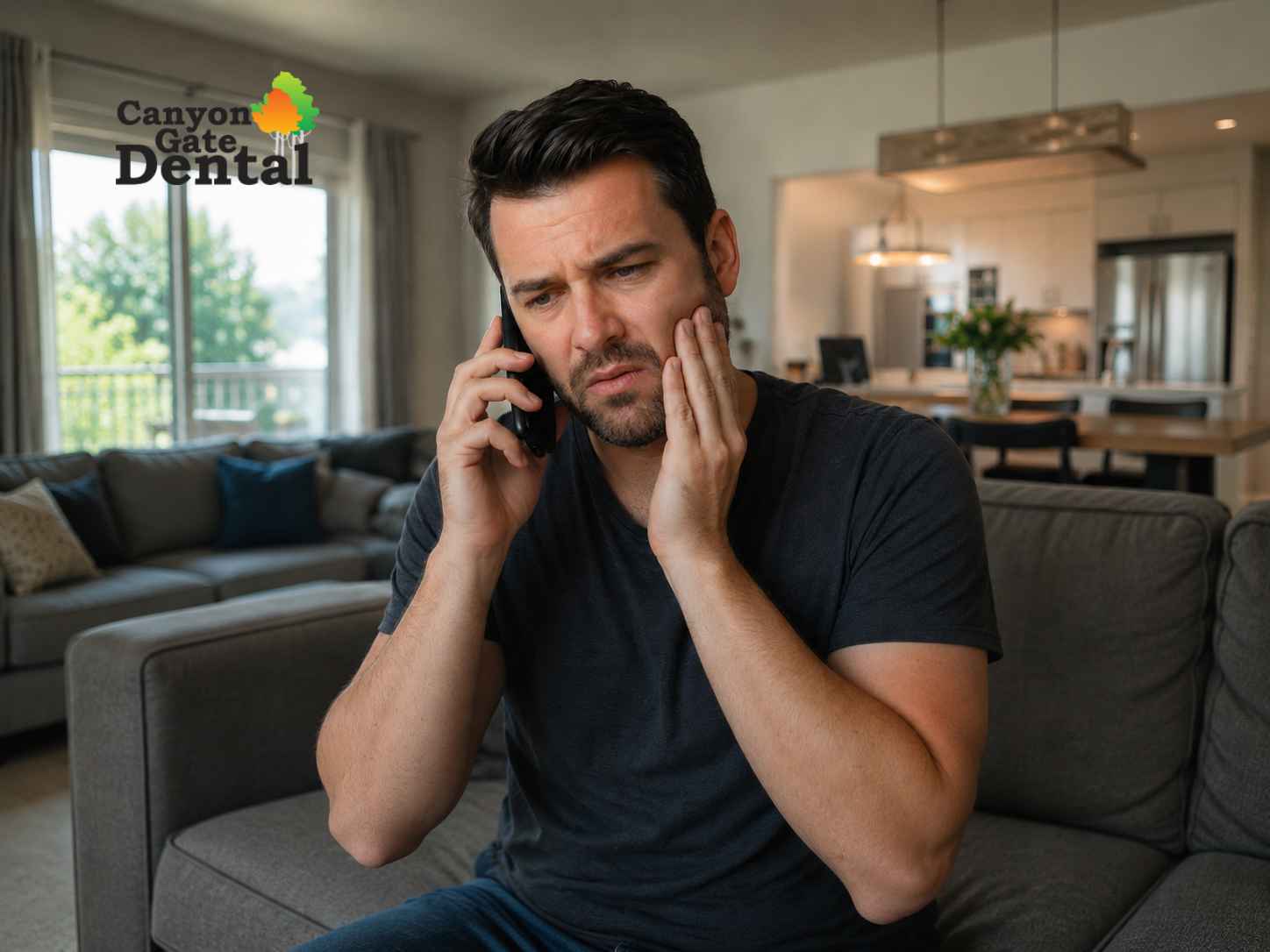
Pain when you bite down is almost never nothing — but it isn’t always an emergency, either. If the pain is sharp, gets worse the harder you bite, or started suddenly after biting something hard (a popcorn kernel, ice, a piece of hard candy), it usually points to a cracked tooth, a failing filling, or an infection near the root — and it’s worth a same-day call to Canyon Gate Dental rather than waiting it out. If the pain is a dull, mild ache that shows up only occasionally and fades quickly once you stop chewing, it can typically wait for your next regular appointment. The real difference comes down to three things: how sharp the pain is, whether it lingers after you release the bite, and whether anything else — swelling, fever, a bad taste — comes with it.
This question comes up often in Orem, a young, dense, family-heavy city built around Utah Valley University and a steady stream of youth sports, hiking, and canyon recreation up against Mount Timpanogos. Between students on tight budgets who put off dental visits, and active kids and teens who chip or crack teeth on the field or the trail, Canyon Gate Dental sees this exact symptom — pain specifically on biting pressure — more than almost any other complaint that walks through the door.
5 Questions That Tell You If It’s an Emergency
Ask yourself these five questions before you decide whether to call now or wait:
1. Does it hurt only when you bite, or does it also ache on its own between meals?
2. Is the pain sharp and sudden, or dull and mild?
3. Did it start right after biting something hard, a sports hit, or recent dental work?
4. Is there any swelling in your face or gums, a fever, or a bad taste in your mouth?
5. Does the pain linger for more than a few seconds after you stop biting down?
If you answered yes to sharp pain, a specific triggering event, swelling or fever, or lingering pain after the bite releases, treat it as urgent and call. If your answers point to a mild, occasional ache that fades immediately, it’s reasonable to schedule a regular visit instead.
What’s Actually Causing Pain When You Bite Down
Pain that’s specifically triggered or worsened by biting pressure has a fairly short list of likely causes, and each one behaves a little differently:
- Cracked tooth syndrome — a hairline crack that opens slightly under biting pressure, irritating the nerve. Classic sign: sharp pain on biting, that eases the instant you release, but can worsen over weeks if untreated.
- A high or uneven filling or crown — recent dental work that sits just slightly too tall, concentrating bite force on one tooth. Usually causes constant, predictable pain on biting, often traceable to a specific recent appointment.
- Dental abscess or infection — an infection at the root puts pressure on the tooth from below, so biting down (pushing the tooth further into an already inflamed area) makes it worse. Often comes with swelling, a bad taste, or low-grade fever.
- A loose or failing old filling or crown — movement under the restoration lets bite force reach sensitive tooth structure underneath, producing sharp, localized pain.
- Sinus pressure — upper back molars sit close to the sinus floor, so sinus congestion can mimic tooth pain on biting, especially if several upper teeth ache at once rather than just one.
- Recent dental work still settling — mild sensitivity to biting for a few days after a filling or crown is normal; sharp or worsening pain beyond about a week is not.
Emergency vs. Can-Wait: How to Tell the Difference
Use this table to match your symptoms to the right next step:
| Symptom | Call Today (Emergency) | Can Wait for Regular Visit |
| Pain type | Sharp, sudden, worsening | Dull, mild, occasional |
| Duration after biting | Lingers several seconds or more | Fades the instant you release |
| Trigger event | Bit something hard, sports injury | No specific event, gradual onset |
| Swelling / fever | Present | Absent |
| Bad taste / drainage | Present (possible abscess) | Absent |
| Timeline | Same-day call to Canyon Gate Dental | Schedule next available regular visit |
What to Do Right Now While You Wait for Your Appointment
A few simple steps can keep things from getting worse before you’re seen:
- Avoid chewing on that side of your mouth entirely — switch to the opposite side for meals.
- Take an over-the-counter pain reliever as directed on the label if you need relief.
- Rinse gently with warm salt water, which can ease irritation around an infected or cracked tooth.
- Avoid very hot, cold, or sugary foods and drinks, which can intensify the pain.
- Don’t attempt to “wiggle test” a cracked tooth or press on it repeatedly to check — this can worsen a crack.
These steps buy you time. They aren’t a substitute for being seen, especially if swelling, fever, or lingering pain are part of the picture.
What Happens at an Emergency Visit at Canyon Gate Dental
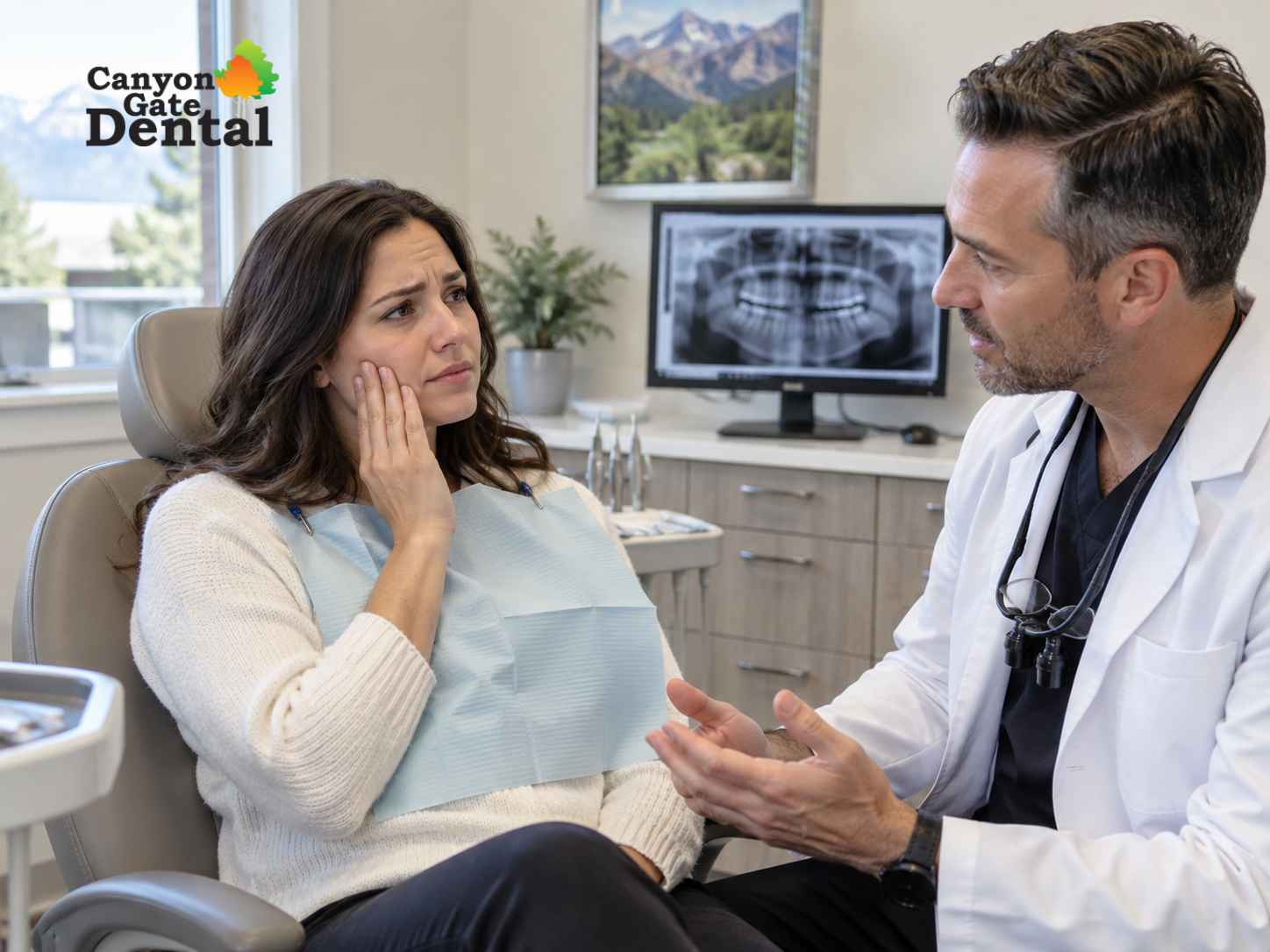
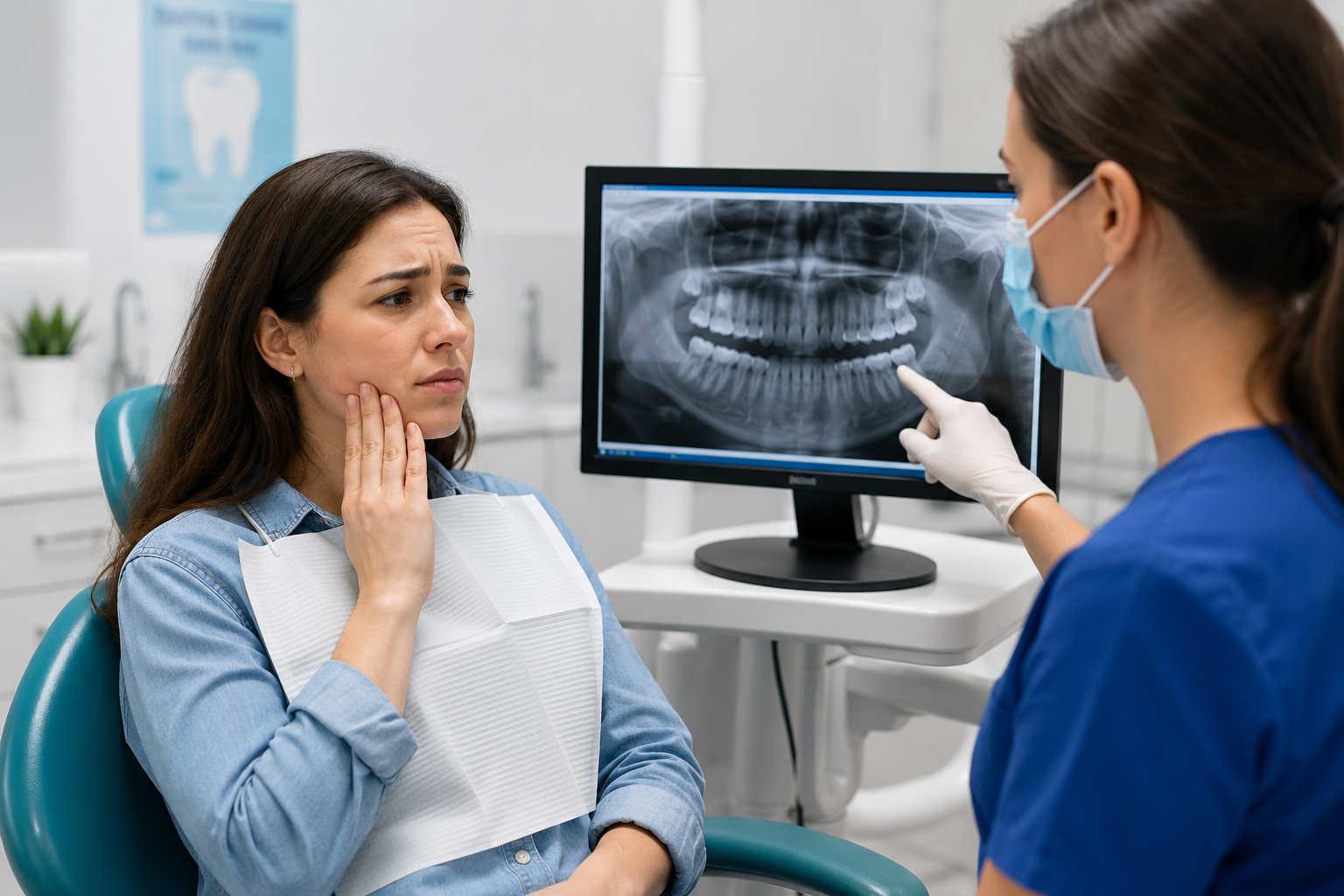
A same-day emergency visit at Canyon Gate Dental in Orem typically follows a predictable sequence: a rapid assessment of the painful tooth and surrounding area, digital X-rays to check for fractures, decay, or infection that aren’t visible on the surface, and a clear explanation of what’s actually causing the pain before any treatment decision is made. Depending on the cause, treatment might mean adjusting a high filling in minutes, treating a cracked tooth before it worsens, draining and treating an infection, or in some cases starting root canal therapy the same day to relieve pressure and stop the pain at its source.
Get Same-Day Answers at Canyon Gate Dental
If your tooth hurts when you bite down and something about it feels off — sharp pain, swelling, or pain that lingers — don’t wait to find out why.
Call Canyon Gate Dental in Orem today at (801) 764-9444 or request an appointment online, and our team will get you in, get you answers, and get you out of pain as quickly as possible.
Frequently Asked Questions
Is it always a dental emergency if my tooth hurts when I bite down?
Not always. A dull, mild ache that fades the moment you stop biting can often wait for a regular appointment. Sharp pain, pain that lingers after the bite releases, or pain paired with swelling or fever should be treated as urgent.
Can a cracked tooth heal on its own if I just avoid chewing on it?
No. A cracked tooth doesn’t heal itself, and avoiding chewing on it only reduces the pain temporarily — the crack typically continues to worsen with normal use, sometimes eventually splitting the tooth or letting bacteria reach the nerve. Getting it evaluated early gives the widest range of treatment options.
Does Canyon Gate Dental offer same-day emergency appointments in Orem?
Yes. Canyon Gate Dental prioritizes same-day emergency appointments whenever availability allows, and calling as early in the day as possible gives you the best chance of being seen quickly.
What if the pain is only when I bite down on one specific spot?
Pain isolated to a single, specific spot when biting is one of the more classic signs of either a crack in that tooth or a high spot on a recent filling or crown — both are quick to diagnose with an exam and X-ray, and both tend to get worse rather than better without treatment.
Should I go to the ER instead of calling a dentist?
Only if you have symptoms beyond the tooth itself — facial swelling that’s spreading toward your eye or throat, difficulty breathing or swallowing, or a fever that won’t come down. Emergency rooms are equipped for medical trauma, not for diagnosing or treating teeth, and most don’t have a dentist on staff, so for pain centered on a tooth, a same-day dental visit is the faster and more effective path.
How much does an emergency dental visit cost in Orem?
Cost depends on what’s actually causing the pain — a simple bite adjustment costs far less than treating an infection or starting root canal therapy. Canyon Gate Dental can verify insurance benefits and go over cost before treatment begins, so you know what to expect before anything is done.