Do Teeth Aligners Really Work? An Orem Adult Guide
Do teeth aligners really work? Yes, for most adults with mild to moderate crowding or gaps, but rarely on the first pass. In the best-known studies, aligners delivered roughly 41% to 50% of the tooth movement that was planned, so extra refinement trays are a normal part of treatment. Results also depend on wearing trays about 20 to 22 hours a day, wearing retainers afterward, and having a dentist examine your teeth first. Complex bite or jaw problems often fit braces better. Here is what the research shows, and what Orem adults should ask before starting.
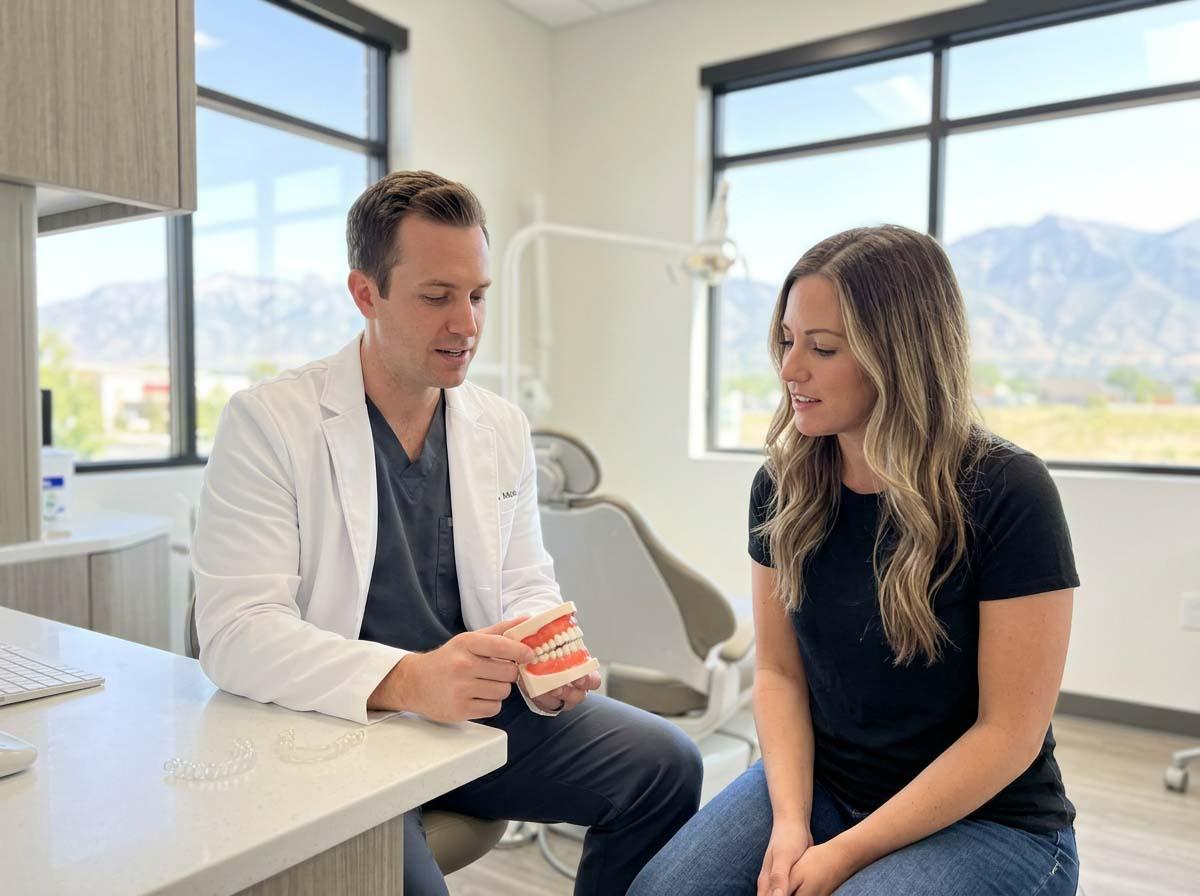
Orem is a good place to ask the question. Utah Valley University enrolled about 48,700 students in fall 2025, and roughly 40% of the class of 2026 was over 25. Plenty of adults here are finishing degrees, changing careers or planning for a wedding, and many wonder whether clear aligners are a sound choice or just good marketing. The honest answer sits somewhere in between.
Do Teeth Aligners Really Work? What the Studies Measured
The most useful number in the research is how much of the planned tooth movement actually happens. A landmark prospective study of Invisalign, the most-studied aligner brand, measured about 41% accuracy. A 2020 follow-up study measured about 50%.
That does not mean half your teeth stay crooked. It means the digital plan asks for more movement than the trays deliver, so dentists plan a second phase to close the gap. In a UK study of 324 adults treated without extractions, 99.4% needed at least one refinement phase, and patients ended up with nearly twice as many trays as first planned.
Some movements are more dependable than others. Tipping teeth, leveling them and moving back teeth along the arch tend to go as planned. Rotating round teeth such as canines and premolars, and moving front teeth up or down, are harder, and they account for many refinements. One review concluded that aligners reliably level, tip and derotate teeth, with canines and premolars the exceptions.
Reviewers also warn that this evidence is thinner than it sounds. Most studies are small, few are randomized, and most measure Invisalign rather than other brands, so reviews rate the certainty of the evidence as low to moderate. In practice, that supports a simple rule: treat any promise of a finished result from the first set of trays with caution.
Do Teeth Aligners Really Work for Complex Cases?
Reviews point to the same sweet spot: mild to moderate crowding, spacing or tipped teeth in adults whose jaws have finished growing, treated without extractions. In that range, aligners are a well-supported alternative to braces. Independent reviews found no reliable difference in treatment time between the two, although the evidence is low certainty, so be wary of anyone promising that aligners are faster.
The picture changes as cases get harder. In a small randomized trial of 40 adults whose crowding was severe enough to need premolar extractions, 11 of 20 aligner cases met the standard for a successful result, compared with 17 of 20 treated with braces. The trial was small and the difference in average scores was not statistically significant, but the authors argued the gap matters clinically. Aligners also move teeth within the jaw rather than changing the jaw itself, which is why the FDA notes that they may not effectively treat more complex orthodontic conditions.
Gum health matters too. For adults with periodontal disease, a 2025 consensus statement calls for coordinated care between the orthodontic provider and a periodontist, with long-term follow-up. That is one reason an exam and imaging should come before any aligner order.
What Decides Your Result: Wear Time, Retainers and Supervision
Aligners only work while they are in your mouth. The FDA advises wearing them generally at least 20 hours a day and keeping your follow-up visits, and warns that treatment may not progress as intended otherwise. In one study that tracked wear, patients averaged about 22 hours a day. No study has measured exactly how much result is lost per missed hour, so treat 20 to 22 hours as the working target rather than a precise threshold. Switching trays early to speed things up is not supported by the research either; the schedule is your dentist’s call.
Retainers are part of the treatment, not an add-on. The American Association of Orthodontists calls a retainer the only sure way to keep teeth where they were moved, says many patients should plan on wearing one long term, and notes that skipping even a few days can let teeth drift. Long-term stability data specific to aligners are sparse, which is another reason to ask how retainers are handled before you start.
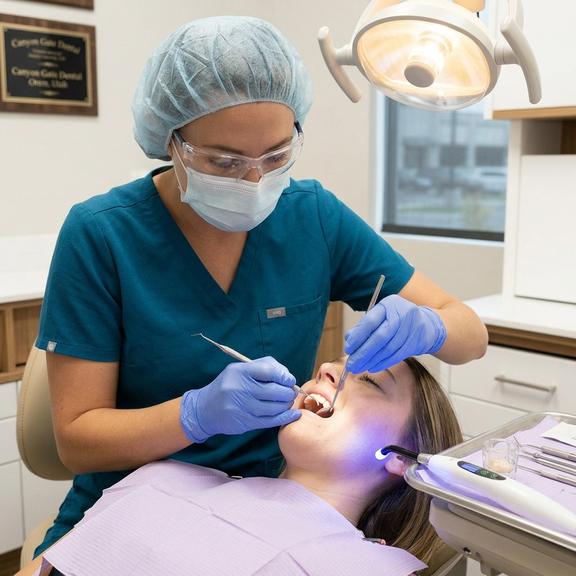
Supervision matters because moving teeth without checking the gums, bone and bite first can cause problems. The American Dental Association lists bone loss, tooth loss, gum recession, bite problems and jaw pain among the risks of unsupervised treatment. In October 2026 the FDA warned that it has not authorized any aligner sold directly to consumers without a prescription and professional supervision, and it reported complaints of new or worsening pain, bite problems and gaps between teeth. If you are comparing options in Orem, ask whether a dentist will examine your mouth in person and who you call when a tray does not fit.
What Is and Is Not Documented About SureSmile
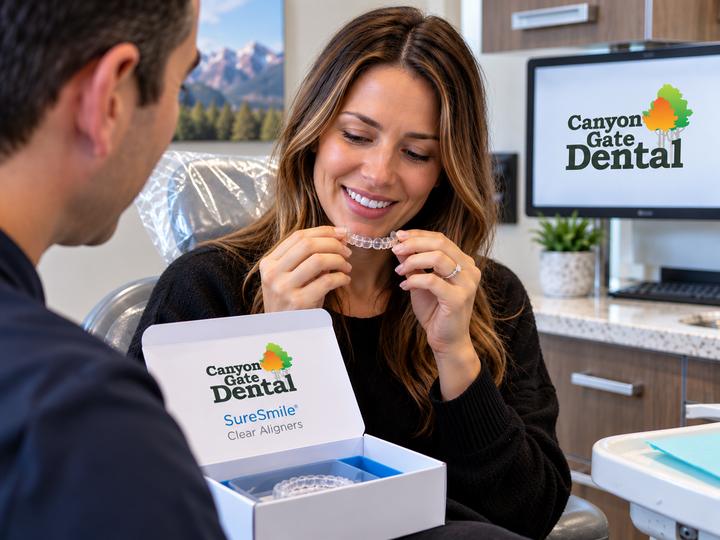
Canyon Gate Dental offers SureSmile aligners, so here is what the record shows. The FDA cleared the SureSmile aligner in April 2026 as substantially equivalent to existing devices. That clearance confirms it meets the FDA’s standard for an aligner; it does not show better results than other brands.
Dentsply Sirona, the maker, reports that three out of four completed cases needed one or fewer refinements. That figure comes from the company’s own case data, not a published study. Independent research on SureSmile aligner outcomes is still small. One 2026 study of 14 patients found that rotation and vertical movement fell short of the plan, the same weak spots seen with other aligners. For now, the broader aligner research above is the most useful guide to what to expect, and your own scan-based plan is the most useful guide for your teeth.
Planning Aligners Around Life in Orem
Because refinements are common, build margin into any deadline. If you are planning around a milestone such as a graduation, a new job or a wedding, ask what the plan looks like if refinement trays are needed and when retainers begin. A few more questions are worth asking any provider:
- Is my case mild to moderate, or would braces fit better?
- Will I get an in-person exam and imaging before trays are ordered?
- What happens if I need refinement trays, and how does that change my timeline?
- How long will I wear retainers, and what happens if one breaks?
- Who do I call if a tray does not fit?
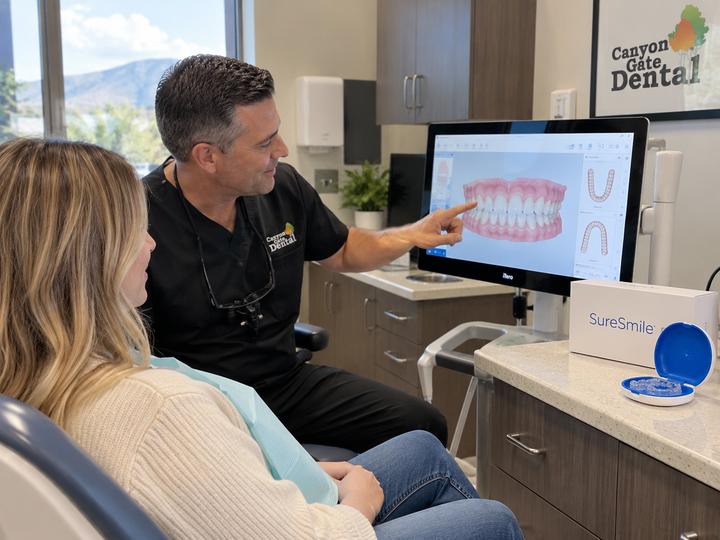
At Canyon Gate Dental in Orem, the SureSmile aligner consultation includes a 3D imaging evaluation of your teeth and bite, a conversation about your goals, and a personalized treatment plan. If your case looks better suited to braces or specialist care, that is the moment to hear it. You can read more on our SureSmile aligners page, or see how the two brands compare in our SureSmile vs Invisalign guide for Orem adults.
The Bottom Line for Orem Adults
So, do teeth aligners really work? For a mild to moderate case, with a dentist’s exam up front, steady wear and a long-term retainer, yes, and results compare reasonably with braces. For complex, extraction or jaw-related cases, the evidence is weaker and often favors braces. Across every case, working well means getting there with refinements, not hitting the plan on the first try.
Wondering whether aligners would work for your teeth?
Call Canyon Gate Dental at (801) 764-9444 to schedule a SureSmile aligner consultation at our Orem office, 440 W 800 N. We welcome patients from Orem and across Utah County.
Frequently Asked Questions
Do clear aligners really work for adults?
Yes, for mild to moderate crowding, gaps and tipped teeth in adults whose jaws have finished growing. Expect refinement trays along the way, and know that reviews rate the overall evidence as low to moderate certainty.
How many hours a day do aligners need to be worn?
The FDA advises generally at least 20 hours a day. Canyon Gate Dental’s SureSmile page gives 20 to 22 hours. The trays come out for meals and cleaning, and the rest of the day they stay in.
Do aligners work as well as braces?
In mild to moderate cases treated without extractions, reviews find broadly comparable results, with no reliable difference in treatment time at low certainty. In complex, extraction and skeletal cases, the evidence favors braces.
Will my teeth shift back after aligners?
They can. The American Association of Orthodontists calls a retainer the only sure way to hold teeth in place and says many patients should plan on long-term wear. Skipping even a few days can let teeth drift.
Can aligners fix a bad bite or very crooked teeth?
Sometimes partly, but aligners move teeth within the jaw and do not change jaw position. The FDA says they may not effectively treat more complex conditions, so an exam and imaging should decide whether your case suits aligners or braces.
Are mail-order aligners as safe as aligners from a dentist?
The FDA said in October 2026 that it has not authorized any aligner sold directly to consumers without a prescription and professional supervision. It reported complaints of pain, bite problems and new gaps between teeth.
Does Canyon Gate Dental in Orem offer clear aligners?
Yes. Canyon Gate Dental offers SureSmile clear aligners. The consultation includes a 3D imaging evaluation of your teeth and bite, a talk about your goals, and a personalized treatment plan. Call (801) 764-9444 to schedule.