Regular Cleaning vs. Deep Cleaning: What’s the Difference? A Guide for Orem, UT Patients
A regular cleaning removes plaque and tartar from the visible surfaces of your teeth and just above the gumline. A deep cleaning — clinically called scaling and root planing — goes further, removing buildup from below the gumline and smoothing the surface of the tooth root itself, and it’s only recommended when an exam finds early signs of gum disease. If a hygienist at Canyon Gate Dental in Orem, Utah recently told you that you need a deep cleaning instead of your usual cleaning, it isn’t an upsell. It’s because your exam showed something a regular cleaning physically can’t fix.
What’s Actually Different Between the Two
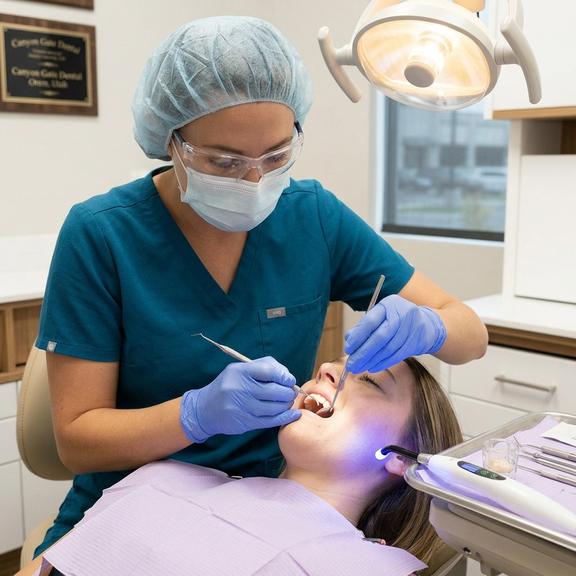
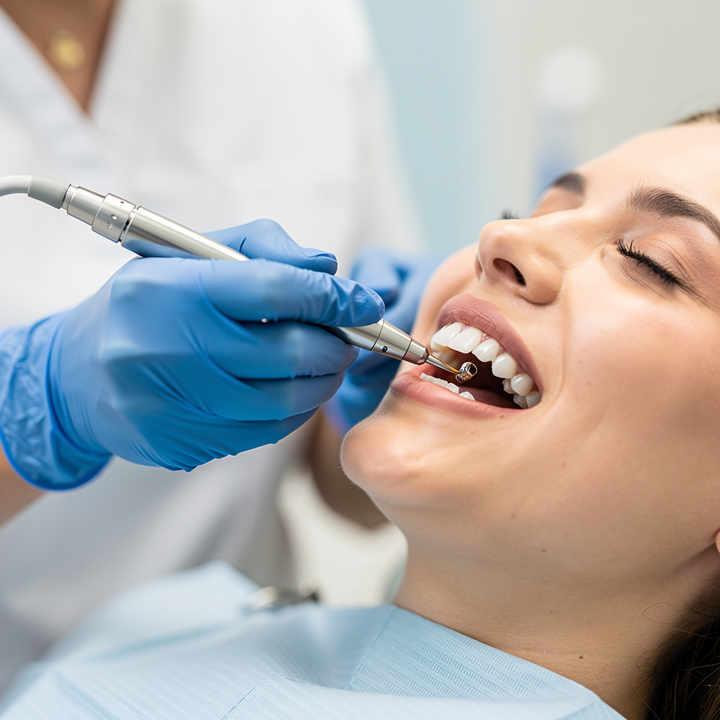
A regular cleaning, also called a prophylaxis, is a maintenance procedure. It’s designed for gums that are healthy — no active infection, no deep pockets between the tooth and gum tissue. The hygienist removes plaque and tartar from the crown of the tooth and the area just below the gumline, then polishes the surface.
A deep cleaning is a treatment, not maintenance. It’s recommended when a periodontal exam — where the hygienist measures the depth of the pocket between your gum and tooth with a small probe — finds pockets deeper than 3 millimeters, along with tartar that has spread below the gumline and onto the root surface. At that point, a regular cleaning can’t reach the problem. The instruments have to go under the gum tissue, and the root itself has to be smoothed so bacteria has a harder time reattaching.
Regular Cleaning vs. Deep Cleaning, at a Glance
| Regular Cleaning | Deep Cleaning | |
| Clinical name | Prophylaxis | Scaling & root planing |
| Who it’s for | Healthy gums, no active disease | Gum pockets 4mm+, early to moderate gum disease |
| Where it cleans | Tooth surface & just above/at the gumline | Below the gumline, along the tooth root |
| Typical visits | 1 visit, both arches | Usually 2 visits, split by side of mouth |
| Anesthetic | Not needed | Local anesthetic, often used for comfort |
| Recall schedule after | Every 6 months | Often every 3–4 months (periodontal maintenance) |
Why Your Orem Dentist or Hygienist Recommended a Deep Cleaning
A few findings during an exam typically trigger the recommendation:
- Gums bleed during probing or when you brush and floss at home
- Pocket depths measured at 4 millimeters or deeper in one or more areas
- Tartar visible below the gumline on the exam or an X-ray
- Gum recession or a change in how teeth fit together
- Persistent bad breath that doesn’t resolve with better home care
Gum disease is more common than most patients assume, and it develops with almost no symptoms early on — which is exactly why it shows up at a routine exam rather than because something hurt. It’s also common among Utah Valley University students and other Orem patients coming back after a semester or two without dental coverage: a longer gap between cleanings gives plaque more time to work its way below the gumline before it’s caught.
What a Deep Cleaning Actually Involves
At Canyon Gate Dental, a deep cleaning is typically split into two appointments — one side of the mouth at a time — rather than done in a single visit. That keeps each appointment manageable and gives your gum tissue on the treated side a chance to begin healing before the other side is done.
- The area is numbed with a local anesthetic so the deeper cleaning is comfortable, not just tolerable.
- Scaling removes plaque and tartar from below the gumline using ultrasonic and hand instruments.
- Root planing smooths the root surface, so it’s harder for bacteria to reattach and easier for your gum tissue to reattach to the tooth.
- A follow-up visit a few weeks later checks how your gums have responded and whether pocket depths have improved.
After a deep cleaning, most patients move to a periodontal maintenance schedule — typically every three to four months instead of the standard six — to keep the treated areas from relapsing. This is a treatment plan Canyon Gate Dental will confirm based on your specific exam, not a blanket rule.
What It Costs in Orem, Utah
Regular cleanings are typically covered close to 100% by dental insurance, since they fall under the “preventive” benefit category. Deep cleanings usually fall under a “basic” or “periodontal” category instead, with different coinsurance — often 80% — and sometimes a deductible. That category shift is the single biggest reason patients feel blindsided by the cost, and it’s worth asking your insurance to verify before your appointment.
| Procedure | Typical Range (out-of-pocket, before insurance) |
| Regular cleaning (prophylaxis) | $75–$200 |
| Deep cleaning, per quadrant | $150–$400 |
| Deep cleaning, full mouth (all 4 quadrants) | $600–$1,600 |
These are typical regional ranges, not a quote — Canyon Gate Dental’s front desk can confirm your exact cost and verify your specific insurance benefits before you schedule.
Is a Deep Cleaning Painful?
Most patients are more anxious beforehand than they need to be. Because the area is numbed with local anesthetic first, a deep cleaning itself isn’t painful — you may feel some pressure or vibration from the instruments, similar to a regular cleaning. It’s common to have some gum tenderness or sensitivity to hot and cold for a day or two afterward as the tissue heals, but this is manageable with over-the-counter pain relief and typically resolves quickly.
What Happens If You Put It Off
Untreated gum disease doesn’t stay in place. The infection below the gumline progresses from gingivitis — which is reversible — to periodontitis, which causes permanent loss of the bone that holds your teeth in place. Left unaddressed long enough, that leads to loose teeth, tooth loss, and treatment options that cost far more and involve more recovery time than scaling and root planing: periodontal surgery, bone grafting, or implants to replace a tooth that couldn’t be saved. For Orem and Utah County families weighing the cost of a deep cleaning against a tight budget, the more relevant comparison is what it costs to fix the same problem two or three years from now instead of today.

Ready to Get Started? Call Canyon Gate Dental in Orem, Utah
If your hygienist recommended a deep cleaning, or it’s been a long time since your last visit and you’re not sure which one you need, Canyon Gate Dental can tell you exactly where you stand with a full periodontal exam.
Call Canyon Gate Dental in Orem, Utah at 801-764-9444 to schedule your exam — we serve patients throughout Orem, Provo, Lindon, American Fork, and Pleasant Grove.
Frequently Asked Questions
Q: How do I know if I need a deep cleaning instead of a regular cleaning?
A: You’ll know from your periodontal exam, not from how your teeth feel. The hygienist measures the depth of the pocket between your gum and each tooth; pockets of 4 millimeters or more, combined with tartar below the gumline, are what indicate a deep cleaning rather than a regular one.
Q: Does dental insurance cover scaling and root planing in Utah?
A: Most plans cover a meaningful portion, but usually under a “basic” or “periodontal” benefit category rather than the “preventive” category that covers regular cleanings — which often means different coinsurance and sometimes a deductible. Canyon Gate Dental’s team can verify your specific benefits before your appointment.
Q: How many appointments does a deep cleaning take?
A: Most patients need two appointments, split by side of the mouth, plus a shorter follow-up visit to check healing. Some patients with more limited buildup can be completed in a single, longer visit.
Q: Will a deep cleaning hurt?
A: The procedure itself is done under local anesthetic, so it shouldn’t hurt during the appointment. Mild gum tenderness or sensitivity for a day or two afterward is normal and typically resolves on its own.
Q: How often do I need cleanings after a deep cleaning?
A: Most patients move to a periodontal maintenance schedule of every three to four months instead of the standard six, to keep the treated areas from relapsing. Canyon Gate Dental will confirm the right interval based on how your gums respond.
Q: Can I just get a regular cleaning instead if I don’t want to pay for a deep cleaning?
A: A regular cleaning’s instruments can’t reach below the gumline the way scaling and root planing can, so it won’t resolve the pockets or the tartar that triggered the recommendation. Skipping it doesn’t remove the underlying problem — it just gives it more time to progress.
Q: What if it’s been years since my last cleaning — do I automatically need a deep cleaning?
A: Not automatically, but it’s common. A longer gap gives plaque more time to harden into tartar and spread below the gumline, so patients returning after a long absence are more likely to need scaling and root planing than a patient who’s been consistent every six months. An exam will tell you which one applies to you.