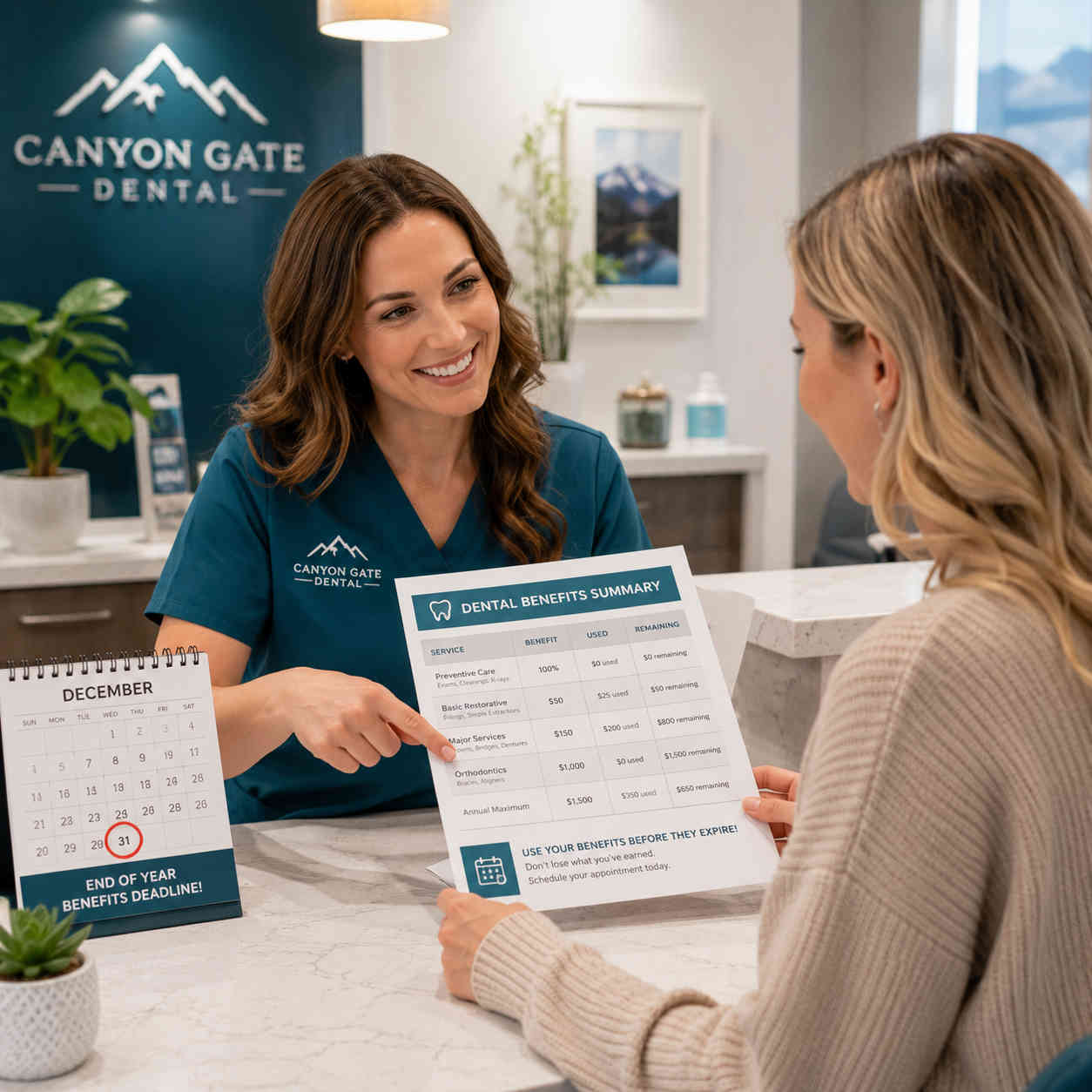
Don’t Let Your Dental Benefits Expire — Use Them Before December 31
Every January, millions of dollars in unused dental insurance benefits simply disappear. Not because patients didn’t need dental work. Not because the coverage wasn’t there. But because the calendar flipped and the window closed.
If you have dental insurance and you haven’t hit your annual maximum, that remaining balance isn’t sitting in a savings account waiting for you. It’s gone on January 1 — and your deductible resets right along with it.
At Canyon Gate Dental in Orem, Utah, this time of year brings a steady stream of patients who call in November and December realizing they have benefits left to use. We love those calls. But we’d rather you didn’t wait that long — because appointment availability gets tighter the closer we get to year end, and the last thing we want is for you to miss your window.
Here’s what you actually need to know.
How Dental Insurance Benefits Work — and Why They Expire
Most dental insurance plans run on a calendar year: January 1 through December 31. Your plan comes with an annual maximum — typically between $1,000 and $2,000 — which represents the total amount your insurance will pay toward dental care in that twelve-month period.
Here’s the part that surprises a lot of people: whatever you don’t use by December 31 doesn’t roll over. It doesn’t accumulate. It doesn’t credit toward next year. It simply resets to zero, and the cycle starts over.
Your deductible — the amount you pay out of pocket before insurance kicks in — also resets at the start of each new benefit year. So if you’ve already met your deductible this year and you have treatment your dentist has recommended, getting it done before December 31 means you’ve already paid the entry cost. Waiting until January means paying it again.
Add that up across a crown, a filling, or even a deep cleaning, and the difference in your out-of-pocket cost between scheduling now versus scheduling in January can be meaningful — sometimes hundreds of dollars.
What Treatments Can You Use Your Benefits On?
More than most people realize. Depending on your plan, your remaining annual benefits may apply to:
Preventive Care — Routine cleanings, exams, and X-rays are typically covered at 80–100% by most plans. If you haven’t had your second cleaning of the year, that’s the first call to make. Preventive care is the highest-value use of your benefits because it’s the most heavily covered and the most likely to catch small problems before they become expensive ones.
Fillings — A cavity your dentist identified at your last visit doesn’t get smaller with time. Most plans cover composite (tooth-colored) fillings at 70–80% after your deductible. Getting it filled now, with your deductible already met, costs you significantly less than waiting until the new year.
Crowns — If a crown has been recommended and you’ve been putting it off, the math strongly favors acting before December 31. Crowns typically fall under major restorative coverage (50–80% depending on your plan), and combined with a met deductible, the timing can make a real difference in what you pay.
Root Canals — Same logic applies. If you know you need one, the cost of waiting is both financial and physical — infections don’t wait for convenient timing, and your insurance benefits aren’t going to be there in January to offset what they’d cover today.
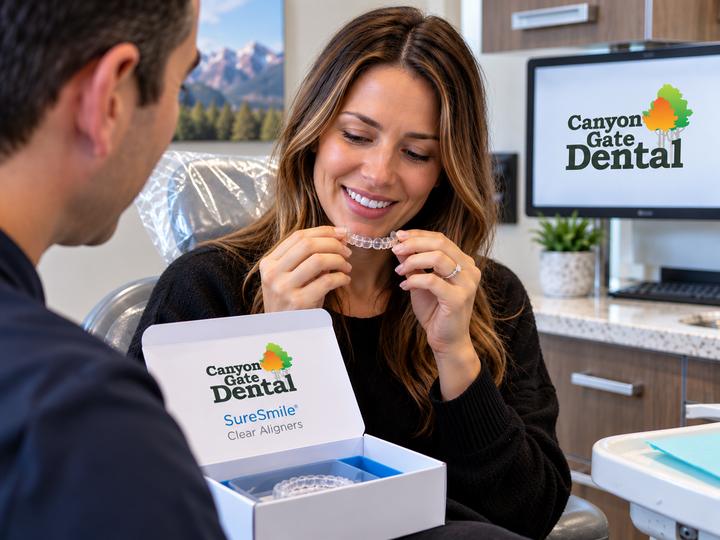
Orthodontic Treatment — Many plans include an orthodontic lifetime maximum that is separate from your annual maximum. If you or your child has been thinking about SureSmile® clear aligners or other orthodontic options, end of year is a smart time to start the consultation — some plans allow benefits to be applied across treatment that begins before December 31.
Teeth Whitening and Some Cosmetic Treatments — This varies by plan, but some insurance and flex spending accounts (FSAs) do cover or partially cover cosmetic treatments. It’s worth a quick call to your insurance provider to check what’s available.
Don’t Forget About Your FSA or HSA
If your employer offers a Flexible Spending Account (FSA) for healthcare expenses, pay close attention to your balance right now. FSA funds typically operate on a strict use-it-or-lose-it basis — unused balances at year end are forfeited.
Health Savings Accounts (HSAs) are more flexible and do roll over, but using HSA funds for dental care is still a smart tax move. Either way, dental care is an eligible expense under both accounts — and Canyon Gate Dental can help you put those dollars to work before the deadline.
Don’t Have Dental Insurance? We Have a Solution.
Not everyone has employer-sponsored dental coverage, and individual dental insurance plans can be more expensive than they’re worth for some patients. If you’re one of the many Orem residents paying out of pocket for dental care, Canyon Gate Dental‘s in-house Membership Plan was built specifically for you.
Our membership plan gives you access to:
- Free routine exams and X-rays
- Free professional cleanings (two per year)
- Significant discounts on fillings, crowns, root canals, and other restorative procedures
- No waiting periods, no annual maximums, no claim denials
It’s not insurance — it’s better, in a lot of ways. One flat annual fee, and you’re covered for the preventive care that keeps your teeth healthy year-round, plus meaningful savings when you need more extensive treatment. Hundreds of Orem patients have already made the switch. If you’d like to learn more, just ask when you call.
Why End-of-Year Appointments Fill Up Fast
If you’re reading this in October, November, or December, the scheduling reality is worth mentioning plainly: this is our busiest time of year. We do our best to accommodate every patient who wants to use their benefits before the year closes, but appointment slots — especially for longer procedures like crowns and deep cleanings — do fill up.
Calling sooner rather than later gives you the best access to convenient appointment times. If you have a procedure your dentist has already recommended, or if you simply haven’t had your second cleaning of the year, this is the week to call — not the week of December 20.

Your Benefits Expire December 31 — Call Canyon Gate Dental Today
We’ve been your trusted dental home in Orem, Utah for years, and we genuinely want to help you make the most of your coverage before it resets. Whether you have a specific treatment waiting to be scheduled, you want to squeeze in a year-end cleaning, or you’re ready to learn more about our Membership Plan — our team is ready to help.
Call Canyon Gate Dental in Orem, Utah at 801-764-9444 today.
We’re located at 440 W 800 N, Orem, UT 84057, and we’re accepting end-of-year appointments now. Don’t let another year of benefits go unused — call us before the calendar beats you to it.
Frequently Asked Questions
Q: When exactly do my dental insurance benefits expire?
Most dental insurance plans follow a calendar year and reset on January 1. Any unused benefits from the current year are forfeited on December 31 — they do not carry over or accumulate.
Q: Do I really save money by scheduling dental work before year end?
Often yes — especially if you’ve already met your annual deductible. Treatment scheduled before December 31 is applied against your already-met deductible, while the same procedure scheduled in January means paying that deductible again from scratch.
Q: What if I’ve already used my annual maximum?
If you’ve hit your annual maximum, you’ve gotten good use of your plan this year. For any remaining recommended treatment, January scheduling makes sense — your benefits reset and you’ll have a fresh annual maximum to work with.
Q: Can I use FSA or HSA funds for dental care at Canyon Gate Dental?
Yes. Dental care is an eligible expense under both FSAs and HSAs. FSA funds typically must be used by December 31 or they’re forfeited, so if you have an FSA balance, now is the time to use it. Call us at 801-764-9444 to schedule.
Q: What is Canyon Gate Dental’s Membership Plan and how does it work?
Our in-house Membership Plan is designed for patients without dental insurance. For a flat annual fee, members receive free preventive care (exams, X-rays, and two cleanings per year) plus discounts on all other procedures — no waiting periods, no annual maximums, no claim forms. Call us or ask at your next visit for current pricing and details.
Q: How far in advance should I schedule my end-of-year appointment?
As early as possible. November and December are our busiest scheduling months. The earlier you call, the better your access to convenient appointment times — especially for longer procedures.
Q: Can I schedule a consultation for SureSmile® aligners before year end and have it count toward my insurance?
Many orthodontic plans allow benefits to apply to treatment that begins before December 31. Call us at 801-764-9444 and we’ll help you understand how your specific plan applies to orthodontic care.
Related reading: Dental Benefits: Use Them or Lose Them