What Happens During a Teeth Cleaning? A Guide for Orem, UT Patients
A professional teeth cleaning takes about 30 to 45 minutes and follows five predictable steps: a quick oral health check, scaling to remove plaque and tartar, polishing, flossing, and a fluoride treatment. None of it should hurt. It’s also a shorter, separate visit from a full dental checkup, which adds a dentist exam and often X-rays on top of the cleaning. If you’re due for a routine cleaning at Canyon Gate Dental in Orem and want to know exactly what’s coming before you’re in the chair, here’s what actually happens, step by step.
Teeth Cleaning vs. Dental Checkup — What’s the Difference?
In Orem, “cleaning” and “checkup” get used interchangeably, but they’re not always the same appointment. A cleaning is the hygienist-led portion covered in this guide — the scaling, polishing, and fluoride work below. A full checkup adds a dentist’s exam, gum measurements, and often X-rays on top of that cleaning.
Established patients coming in for a routine six-month visit are frequently scheduled for a cleaning on its own if X-rays and a full exam were done recently. New patients, or anyone overdue, typically get the combined checkup-and-cleaning visit instead. If you’re not sure which one is on your calendar, Canyon Gate Dental’s front desk can confirm before your appointment.
Step 1: Oral Health Check
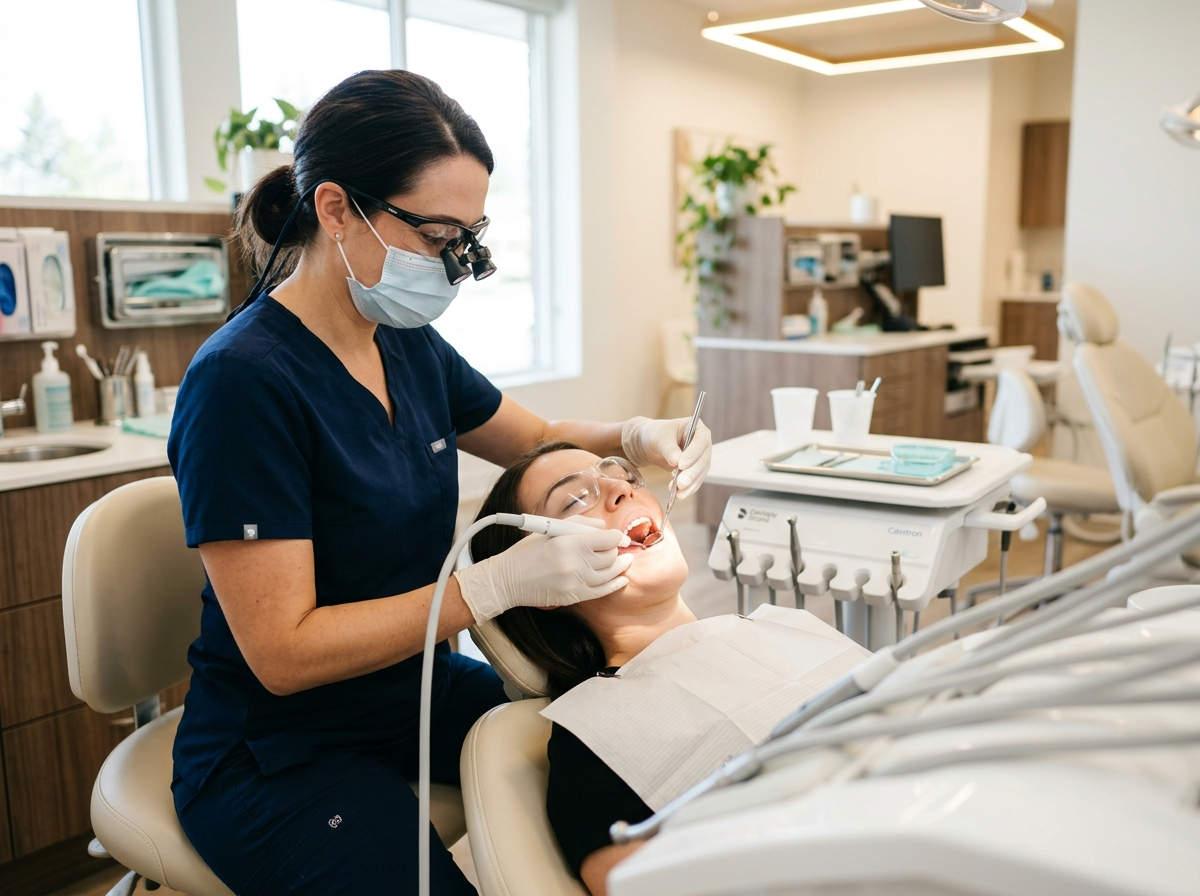
Your hygienist starts with a quick visual and tactile check — a small mirror to look around each tooth, and a light pass along the gumline to spot anything that needs attention later, like inflammation or unusual staining. This part takes just a couple of minutes and isn’t a diagnosis; if something needs a closer look, your hygienist notes it for the dentist rather than treating it on the spot.
Step 2: Scaling — Removing Plaque and Tartar
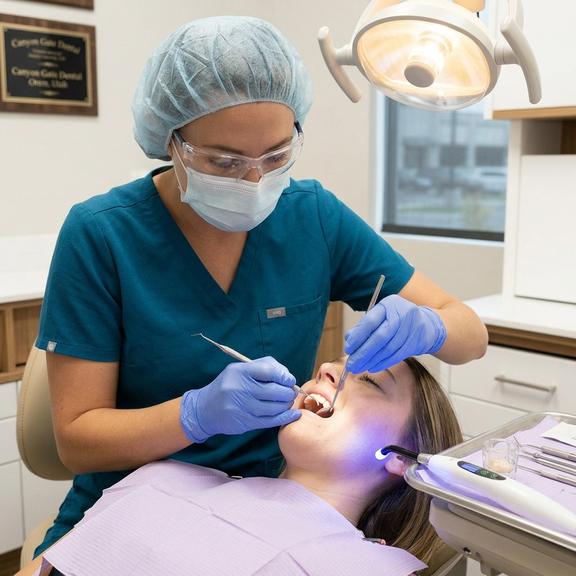
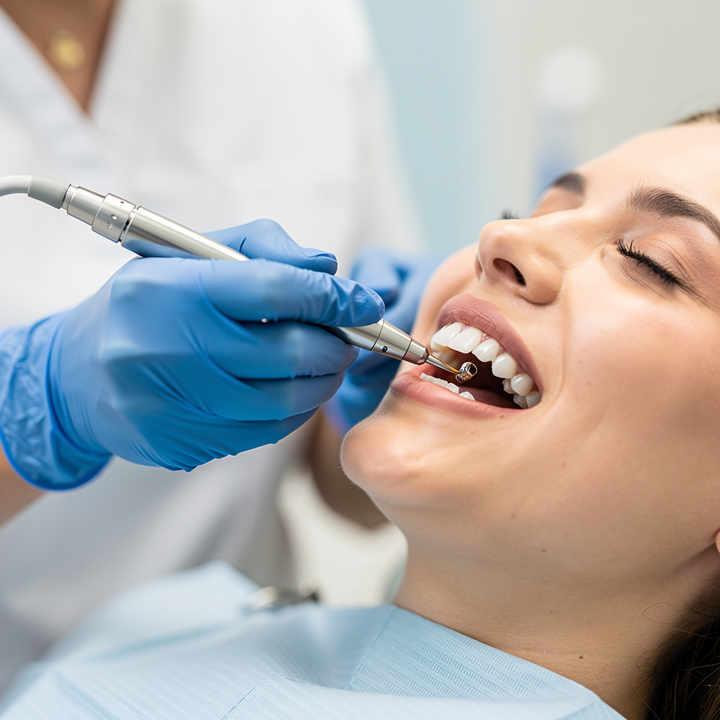
This is the core of the appointment. Your hygienist uses an ultrasonic scaler — a small tool that combines gentle vibration with a fine water spray — to break loose plaque and tartar along the gumline and between teeth. You’ll hear a faint high-pitched hum and feel light pressure or vibration, but scaling shouldn’t be painful. If a spot feels more than mildly uncomfortable, say so; your hygienist can adjust technique or pressure.
Plaque is soft and forms daily, which is why brushing and flossing handle most of it at home. Once it sits long enough, it hardens into tartar, and tartar only comes off with professional instruments — no amount of home brushing removes it. Orem’s dry, high-altitude climate also reduces saliva production for a lot of residents, and saliva is one of the mouth’s natural rinsing agents. That’s a small but real reason tartar can build up a bit faster here between visits, even for people with a solid home routine.
Step 3: Polishing
After scaling, your hygienist polishes your teeth with a slow-turning rubber tool and a mildly gritty paste, usually available in a couple of flavors. Polishing smooths the enamel and lifts surface stains from coffee, tea, or everyday wear that scaling alone doesn’t fully address. It’s a mild abrasive, which is exactly why it’s done a couple of times a year in-office rather than as a daily habit.
Step 4: Flossing and Rinse
Your hygienist flosses between every tooth, checking as they go for bleeding or unusually tight contacts between teeth — both useful signals about gum health. A quick rinse follows to clear away any loosened debris from scaling and polishing.
Step 5: Fluoride Treatment
The visit typically wraps with a fluoride varnish or foam applied directly to your teeth. It hardens enamel and helps your teeth resist new cavities for months afterward. This step matters more in Orem than it used to: Utah’s HB81 prohibited public water systems from adding fluoride starting May 7, 2025, and Orem’s water utility has confirmed it no longer fluoridates. For most residents, this in-office application is now one of the few concentrated fluoride exposures available, rather than a routine top-up on something already in the tap water.
What’s Included in a Routine Cleaning
| Included in a Cleaning | Part of a Full Checkup Instead |
| Hygienist oral health check | Dentist’s diagnostic exam |
| Scaling (plaque and tartar removal) | Digital X-rays |
| Polishing | Treatment plan or diagnosis |
| Flossing | Cavity or gum disease diagnosis |
| Fluoride treatment | New-patient paperwork and consult |
How Long Does It Take, and Does It Hurt?
A routine cleaning at Canyon Gate Dental generally runs 30 to 45 minutes. It can take longer if it’s been a while since your last visit and there’s more tartar to clear, or shorter if you’re on a consistent six-month schedule.
Scaling and polishing shouldn’t hurt. You may feel pressure, mild vibration, or brief sensitivity — especially around inflamed gums or teeth that haven’t been professionally cleaned in a while. Tell your hygienist if anything feels like more than mild pressure; they can slow down, adjust the angle, or work in shorter passes around sensitive spots.
Ready to Book?
Call Canyon Gate Dental in Orem at 801-764-9444, or schedule online, and our team will find a cleaning time that works for you.
Frequently Asked Questions
Does a teeth cleaning hurt?
It shouldn’t. You may notice pressure or light vibration from the scaler, and brief sensitivity if your gums are inflamed, but scaling and polishing aren’t meant to be painful. Speak up if something feels sharp or uncomfortable — your hygienist can adjust.
How long does a routine cleaning take?
Most routine cleanings take 30 to 45 minutes. Heavier tartar buildup or a longer gap since your last visit can extend that somewhat.
What’s the difference between a regular cleaning and a deep cleaning?
A regular cleaning, described above, addresses plaque and tartar at and just below the gumline. A deep cleaning (scaling and root planing) treats tartar that has spread further below the gumline, usually because of gum disease, and is a different appointment with its own process. See our Regular Cleaning vs. Deep Cleaning guide for the full comparison.
How often should I get a professional cleaning?
Most patients do well on a six-month schedule, though some benefit from more frequent visits depending on gum health and cavity risk. For a fuller breakdown, see our guide to dental checkup frequency.
Will insurance cover a routine cleaning?
Most dental insurance plans cover two preventive cleanings per year at a high percentage, often with no deductible, since cleanings fall under the preventive benefit category. Canyon Gate Dental’s team can verify your specific benefits before your appointment.
Why does my hygienist still use fluoride if Orem’s water isn’t fluoridated anymore?
Utah stopped adding fluoride to public water statewide in May 2025, so most Orem residents no longer get fluoride through their tap water. The in-office fluoride treatment during your cleaning is now one of the more concentrated fluoride exposures available to help harden enamel and resist new cavities.
It’s been over a year since my last cleaning — what should I expect?
Likely a bit more tartar to clear and possibly a slightly longer appointment, but nothing to be anxious about. Canyon Gate Dental sees this regularly, and your hygienist will adjust the pace to keep you comfortable.